Blog

  • How to Fix Slow Boot Mac: 9 Proven Fixes That Actually Work in 2026

    How to Fix Slow Boot Mac: 9 Proven Fixes That Actually Work in 2026

    Fix slow boot Mac issues once and for all — because your morning routine should not include a ten-minute waiting game just to see your desktop. You press the power button, grab your coffee, and return to find it still crawling through startup. A slow Mac boot time is frustrating — but rarely a death sentence for your machine. In most cases, the culprit is a quiet buildup of login items, a full startup disk, or outdated system settings dragging your machine down. Whether you own a MacBook Air, MacBook Pro, or iMac — running Apple Silicon or an older Intel chip — these nine proven fixes will have your Mac startup running fast again in 2026, often within 30 minutes.

    Signs Your Mac Has a Slow Boot Problem

    Before you start applying fixes, you need to confirm you actually have a mac startup problem — not just impatience. A healthy Mac with a solid-state drive should boot in 15 to 35 seconds. If yours is taking 3, 5, or 10 minutes, something is genuinely wrong. The mac spinning wheel on startup, a progress bar that barely moves, or a login screen that freezes after you type your password — these are all clear distress signals your system is sending you.

    However, not every symptom points to the same cause. A mac slow to start up before the login screen appears usually means a disk, storage, or hardware issue. Slowness after you log in typically points to too many login items mac launching simultaneously. Knowing which stage is slow helps you skip to the right fix immediately — and saves you 30 minutes of trial and error.

    Mac TypeNormal Boot TimeConcerning Boot Time
    MacBook Pro M3 / M4 (SSD)10–20 secondsOver 60 seconds
    MacBook Air M2 (SSD)15–25 secondsOver 90 seconds
    MacBook Pro Intel (SSD)20–35 secondsOver 2 minutes
    iMac Intel (HDD)60–90 secondsOver 5 minutes
    MacBook Pro Intel (HDD)90–120 secondsOver 10 minutes

    How Slow Is Too Slow? Mac Boot Time Benchmarks

    Use the table above as your reference point. iMac taking too long to boot beyond 5 minutes on a traditional hard drive is a strong sign the drive is either nearly full, failing, or both. For Apple Silicon Macs — M1, M2, M3, M4 — a boot time over 60 seconds is unusual enough to investigate immediately. These chips are designed for near-instant startup, so if yours is crawling, something in software is dragging it down rather than hardware.

    Why Is My Mac Slow to Boot? Common Causes in 2026

    Why is my mac slow to boot? This is the question millions of Mac users type into Google every single day. The answer is almost never one single thing. It is usually a combination of small problems that have built up over months. Too many startup apps, a mac startup disk full, outdated software, and hidden background processes are the four most common culprits — and they tend to stack on top of each other quietly until your boot time triples.

    The less obvious causes are the ones most guides completely ignore. macOS background tasks like Spotlight reindexing, iCloud syncing, and system cache rebuilding can trigger silently at startup — especially after a macOS update. Mac kernel extensions from third-party apps like VPN clients, printer drivers, and antivirus software can conflict with new macOS builds and stall the boot process entirely. Thermal throttling mac on older machines with clogged fans can also slow the entire startup sequence as the system protects itself from overheating.

    CauseHow CommonImpact on Boot
    Too many login itemsVery commonHigh
    Low storage (under 10%)Very commonHigh
    Outdated macOS or appsCommonMedium
    Corrupted diskModerateHigh
    Malware or adwareModerateMedium–High
    Failing HDDLess commonVery High
    Kernel extension conflictsLess commonMedium
    Spotlight reindexing post-updateCommon after updatesMedium

    The Hidden Culprits Most Users Never Check

    The LaunchAgents LaunchDaemons folders on your Mac are where apps leave behind background processes that nobody ever cleans up. Every time you install Dropbox, Zoom, Google Drive, or a VPN client, they add startup helpers to these folders. When you uninstall the app, the helpers often stay behind. Over a year, these abandoned processes stack up and quietly extend your mac startup time by minutes. Open Terminal and type ls ~/Library/LaunchAgents to see exactly what is hiding on your machine right now.

    How to Fix Slow Boot Mac: Step-by-Step Guide

    Here is the most important section of this entire article. How to fix slow boot mac comes down to a clear sequence — start with the easiest fixes first and work toward the advanced ones only if needed. The majority of users — easily 80 percent — fix their slow boot problem in the first four steps. You disable unnecessary startup items mac, run Disk Utility First Aid mac, free up storage, and boot into safe mode mac to isolate conflicts. That sequence alone resolves most cases.

    For the remaining 20 percent, the deeper fixes involve system resets, malware removal, or hardware changes. None of these are complicated. They just require a bit more time and confidence. The full step-by-step table below tells you exactly what to do, how long it takes, and how difficult each step is — so you can decide how far down the list you actually need to go before your fix slow boot mac problem is solved.

    StepActionTime RequiredDifficulty
    1Remove login items (System Settings → General → Login Items)5 minutesEasy
    2Run Disk Utility First Aid on startup disk10 minutesEasy
    3Boot into Safe Mode to isolate conflicts5 minutesEasy
    4Free up storage to 15–20% free15–30 minutesEasy
    5Reset NVRAM/PRAM on Intel Macs2 minutesEasy
    6Reset SMC on Intel Macs2 minutesEasy
    7Update macOS and all apps20–60 minutesEasy
    8Run malware scan with Malwarebytes15 minutesEasy
    9Reinstall macOS or upgrade to SSD2–4 hoursAdvanced

    Step-by-Step Quick Fix Checklist (30 Minutes or Less)

    Start by opening System Settings, navigating to General, then Login Items. Remove anything you do not recognize or actively use. This is the single highest-impact action for most slow boot macbook pro users. Next, open Disk Utility, select your startup disk, and click Run under First Aid. This repairs filesystem errors that silently drag down boot performance. Then time your next boot. If it improves — great. If not, work down the table. Safe mode mac on Intel means holding Shift at startup. On Apple Silicon, hold the Power button until startup options appear, then hold Shift before clicking Continue. That difference alone confuses most users and most guides online.

    Fix Mac Slow Boot After macOS Update

    Mac slow boot after macOS update is one of the most searched Mac problems every single year — and for good reason. When Apple releases a major update, macOS immediately kicks off several automated tasks in the background. Spotlight reindexing rebuilds your entire file search index. iCloud syncs pending changes. The system rebuilds caches. All of this happens simultaneously and consumes significant CPU and disk resources. If your Mac is already low on storage or has an older processor, these tasks make the first few hours after an update feel genuinely painful.

    However, is it normal for mac to be slow after update? Yes — for 2 to 4 hours. Beyond that, persistent slowness is a real problem that needs addressing. Check Activity Monitor mac immediately after an update. Sort by CPU usage. If you see mds_stores or mdworker at the top of the list, Spotlight reindexing mac slow is the culprit and it will finish on its own. If you see a third-party app consuming 80 percent CPU, that app likely has a compatibility issue with the new macOS version and needs updating or removing.

    Intel Mac vs Apple Silicon: What Works Differently

    This is the section that most competing guides completely skip — and it is critical. Mac slow boot Intel vs Apple Silicon requires entirely different fix strategies. Intel Macs support manual reset NVRAM mac, reset PRAM mac, and reset SMC mac operations. Apple Silicon Macs — every Mac with an M1, M2, M3, or M4 chip — handle all of these automatically during a normal restart. Attempting Intel reset procedures on an Apple Silicon Mac wastes your time and does nothing.

    FixIntel MacApple Silicon Mac
    NVRAM ResetHold Cmd+Opt+P+R at bootNot applicable — auto-resets
    PRAM ResetSame as NVRAMNot applicable
    SMC ResetSpecific key combos by modelRestart handles this automatically
    Safe ModeHold Shift at startupHold Power → select Safe Mode
    Recovery ModeCmd+R at bootHold Power until options appear
    Disk Utility First AidSame processSame proces

    Free Up Storage Space to Speed Up Mac Boot Time

    Low storage mac slow is not a myth — it is one of the most well-documented causes of degraded Mac performance. macOS relies on free disk space to manage virtual memory mac, swap files, and system caches. When your startup disk drops below 10 percent free space, the operating system starts struggling with the most basic operations. Mac startup disk full warnings are not just annoyances. They are performance warnings that directly extend your boot time by forcing macOS to hunt for temporary storage space every single time it starts up.

    The fix is straightforward. How to free up disk space on mac starts with Apple’s built-in storage tools — go to Apple menu, System Settings, General, then Storage. Enable Optimize Storage to automatically offload older media to iCloud. Delete the contents of your Downloads folder — most Mac users are surprised to find gigabytes of forgotten files sitting there. Move large video or photo libraries to external storage. Use a free tool like OmniDiskSweeper to visualize exactly which folders are consuming the most space. The goal is simple: keep 15 to 20 percent free space mac at all times.

    Free Space AvailableBoot Speed Impact
    Over 20% freeFast — no storage-related slowdown
    15–20% freeNormal — occasional minor slowdown
    10–15% freeNoticeable boot delay begins
    5–10% freeSignificant delay — fix immediately
    Under 5% freeSevere — Mac may warn and boot very slowly

    How Much Free Space Does Your Mac Actually Need?

    The math is simple. Multiply your total storage capacity by 0.20 and that is your minimum free space target. A 256GB Mac needs at least 51GB free. A 512GB Mac needs at least 102GB free. Does free disk space help mac boot faster? Absolutely — and the improvement is often dramatic and immediate once you clear space past the 15 percent threshold. Think of your Mac’s storage like a work desk. A completely cluttered desk makes every single task slower. Clear the desk and the same work happens twice as fast.

    Reset PRAM, NVRAM and SMC to Fix Mac Boot Issues

    Reset NVRAM mac and reset PRAM mac are two fixes that sound intimidating but are genuinely simple and completely safe. On Intel Macs, NVRAM stores boot configuration settings including which disk to boot from, display resolution, and startup sound preferences. When these settings become corrupted — which happens over time — the Mac can experience slow or erratic boot behavior. Resetting NVRAM clears these corrupted preferences and forces macOS to rebuild them cleanly. The entire process takes under 20 seconds and requires no technical knowledge.

    Reset SMC mac Intel is the other key reset for boot problems. The System Management Controller handles power management, fan behavior, and thermal regulation. A corrupted SMC can cause the Mac to run its fans at full speed during startup, take unusually long to show the Apple logo, or behave sluggishly during the first minutes of operation. Neither NVRAM nor SMC resets delete any personal data or installed applications. They are safe, reversible, and often deliver immediate improvement for Intel Mac startup fix problems.

    Reset TypeMac ModelHow To Do It
    NVRAM/PRAMIntel Mac (all models)Shutdown → Power on → Hold Cmd+Opt+P+R immediately → Hold 20 seconds
    SMCMacBook with T2 chipShutdown → Hold Ctrl+Opt+Shift+Power for 7 sec → Release → Power on
    SMCMacBook (non-T2, removable battery)Remove battery → Hold Power 5 sec → Reinsert → Power on
    SMCiMac / Mac Pro / Mac mini (Intel)Shutdown → Unplug 15 sec → Plug in → Wait 5 sec → Power on
    Apple SiliconAny M-series MacSimply restart — NVRAM and SMC reset automatically

    Apple Silicon Users: What to Do Instead

    Apple Silicon boot process is fundamentally different from Intel. Does resetting PRAM fix slow boot mac on Apple Silicon? No — because there is no manual PRAM reset on these machines. Apple Silicon Macs self-manage these low-level settings. Instead, your most powerful tools are: removing login items, running Disk Utility First Aid, booting into Safe Mode, and checking for outdated macOS apps that conflict with your current macOS version. For a deeper system reset on Apple Silicon, go to System Settings, General, Transfer or Reset, and choose Reset All Settings — this clears system preferences without touching your files.

    Check for Malware and Junk Software Causing Slow Boot

    Can malware cause slow mac boot? Absolutely — and it is more common in 2026 than most Mac users realize. Malware mac slow performance is not a Windows-only problem. Adware, browser hijackers, and unwanted software regularly install LaunchAgents that fire up automatically at boot time. These hidden processes consume CPU and RAM before your desktop even finishes loading. The telltale signs are: unusually high CPU usage at idle, browser redirects you never set up, toolbars or extensions that appeared without your permission, and a Mac that runs hot during startup for no obvious reason.

    How to check what is slowing my mac down starts with Activity Monitor mac CPU usage. Open Activity Monitor immediately after boot and sort by CPU — anything consuming over 20 percent at idle is worth investigating. Then check your login items and your ~/Library/LaunchAgents folder for entries from apps you do not recognize. Adware mac performance damage is often immediate and dramatic once you remove the offending software. A free 15-minute scan with Malwarebytes for Mac has resolved slow boot problems for countless users who had no idea malware was the cause.

    ToolCostWhat It DoesLink
    Malwarebytes for MacFree (basic)Scans and removes malware and adwaremalwarebytes.com
    EtreCheckFree / PaidFull system snapshot with LaunchAgents reportetrecheck.com
    OmniDiskSweeperFreeFinds largest files consuming storageomnigroup.com
    Apple DiagnosticsFree (built-in)Tests hardware for failuresHold D at boot (Intel) or after power-on (AS)
    Disk Utility First AidFree (built-in)Repairs disk permissions and filesystem errorsBuilt into macOS — no download needed

    Free Tools to Scan and Clean Your Mac in 2026

    EtreCheck mac diagnostics deserves special mention here. It generates a complete system snapshot that shows every background process, LaunchAgent, and kernel extension running on your Mac — without revealing any personal information. It is the tool that Apple Support advisors themselves recommend on the official Apple Support Communities. Run it, paste the report into any Mac forum, and experienced users can immediately spot the cause of your mac startup problems. Never pay for a “Mac cleaner” advertised in a pop-up window. Those are frequently the malware themselves in disguise.

    Advanced Fixes: Reinstall macOS and Hardware Upgrades for Slow Boot

    Does reinstalling macOS fix slow boot? In many cases — yes. When software-level fixes have not resolved the problem, a macOS reinstall clears corrupted system files, resets system configurations, and gives your Mac a clean software foundation. The reassuring truth is that reinstall macOS recovery using the built-in Recovery Mode keeps all your personal files, apps, and settings completely intact. It is not a wipe. It is more like giving the operating system itself a fresh coat of paint while leaving everything inside your house untouched. On Intel Mac, enter Recovery with Command+R at boot. On Apple Silicon, hold the Power button until startup options appear.

    Does SSD speed up mac boot time? The answer is dramatic and immediate. A SSD upgrade mac speed transformation on an older Intel MacBook with a traditional hard drive is one of the most stunning Mac improvements you can make. Consider this real-world case: a 2015 MacBook Pro with a spinning hard drive was taking 12 full minutes to boot. After a straightforward SSD swap, the same machine booted in 22 seconds. That is not a typo. Same processor, same RAM, same macOS installation — but a 30x improvement in boot speed. HDD vs SSD mac boot difference is not incremental. It is transformational.

    SituationRecommended Action
    Software fixes failed, data intactReinstall macOS from Recovery
    Severe system corruption suspectedClean install (erase + reinstall)
    Mac has traditional HDDSSD upgrade — most impactful single fix
    Mac shows constant high memory pressureRAM upgrade if model supports it
    Mac is pre-2016 Intel with HDDSSD upgrade first then reassess
    All fixes failed, Mac is post-2019Apple Store diagnostic or consider replacement

    When to Upgrade vs When to Replace Your Mac

    MacBook Pro hardware upgrade makes financial sense when your Mac is pre-2018, has upgradeable components, and still meets your daily needs aside from the speed issue. Replacement makes more sense when your Mac cannot run the current macOS version, has completely soldered components at their limits, or when repair costs exceed 50 percent of what a replacement would cost. Apple’s Genius Bar offers free hardware diagnostics — always use this before spending money on upgrades. RAM upgrade mac is worth doing if Activity Monitor consistently shows memory pressure in the red zone. If your machine has soldered RAM — which most post-2016 MacBooks do — focus instead on storage upgrades and software optimization.

    Best Habits to Prevent Slow Mac Boot Times Long-Term

    The best fix slow mac startup strategy is the one you never need to use because you maintained your Mac properly. Restart your Mac fully at least once a week — closing the lid is not the same as restarting, and a proper restart clears temporary memory, resets background processes, and prevents the gradual buildup of stuck daemons. Review your login items mac once a month and remove anything unfamiliar or unused. Keep macOS and every installed app updated — updates routinely include boot performance improvements that only apply if you install them. Monitor your storage weekly and never let free space drop below 15 percent.

    Every quarter, run Disk Utility First Aid mac on your startup disk, boot into Safe Mode to check for login item conflicts, run a Malwarebytes scan, and review your ~/Library/LaunchAgents folder for orphaned entries from deleted apps. These four quarterly tasks take under 30 minutes combined and prevent the exact accumulation of problems that cause mac takes long to boot situations. Think of it exactly like an oil change. You do not wait until the engine seizes — you maintain it on a schedule. A fast Mac is not a lucky Mac. It is a maintained Mac.

    TaskFrequencyTimeTool
    Full Mac restartWeekly2 minBuilt-in
    Review login itemsMonthly5 minSystem Settings
    Check free storageMonthly2 minSystem Settings → Storage
    Update macOS and appsMonthly15–30 minSystem Settings → Updates
    Run Disk Utility First AidQuarterly10 minDisk Utility
    Malware scanQuarterly15 minMalwarebytes
    Review LaunchAgents folderQuarterly5 minTerminal or Finder
    Boot into Safe Mode checkQuarterly5 minBuilt-in

    Your Monthly Mac Maintenance Checklist

    Apps like Bartender, Dropbox, Google Drive, OneDrive, and Zoom all install startup items mac helpers automatically — and they rarely ask your permission. Every few months these accumulate into a meaningful drag on your mac startup time. The fix takes five minutes: System Settings, General, Login Items, remove anything you do not actively need at boot. For storage management, Apple’s official guide at Apple Support — Optimize Mac Storage walks you through every built-in tool available. Reduce mac boot time is not a one-time project. It is a five-minute monthly habit that compounds into years of fast, reliable startup performance.

    FAQs

    Why is my Mac so slow to boot?
    Too many login items, a nearly full startup disk, or an aging HDD are the most common culprits.

    How to make a Mac boot faster?
    Reduce login items (System Settings → General → Login Items), free up disk space, and consider upgrading to an SSD.

    Why is my Mac so slow and not loading anything?
    Low RAM, excessive background processes, or a failing drive can cause this — check Activity Monitor for resource hogs.

    What does an SMC reset do?
    It resets hardware-level settings controlling power, cooling, battery, and startup behavior, often fixing sluggishness or fan issues.

    Will resetting SMC delete anything?
    No, an SMC reset only resets hardware controller settings — your files, apps, and data remain completely untouched.

    How do I fix the circle of death on my Mac?
    Force-restart, then boot into Safe Mode to isolate the issue; if it persists, run First Aid in Disk Utility or reinstall macOS.

    Conclusion

    A slow boot macbook pro or iMac is almost never a sign that your Mac is finished. It is a sign that something specific and fixable has gone wrong. You now have nine proven fixes, a boot time benchmark table, a complete Intel vs Apple Silicon comparison, and a quarterly maintenance schedule that prevents this problem from ever coming back.

    Start right now. Open System Settings, click General, click Login Items, and remove every app you do not need at startup. That single action — taking under five minutes — solves the mac slow startup fix problem for the majority of Mac users reading this guide today. Your Mac was fast when you first got it. These fixes bring it back. Go get your fast Mac back.

  • Wikiwand Extension: Honest Review & What It Does in 2026

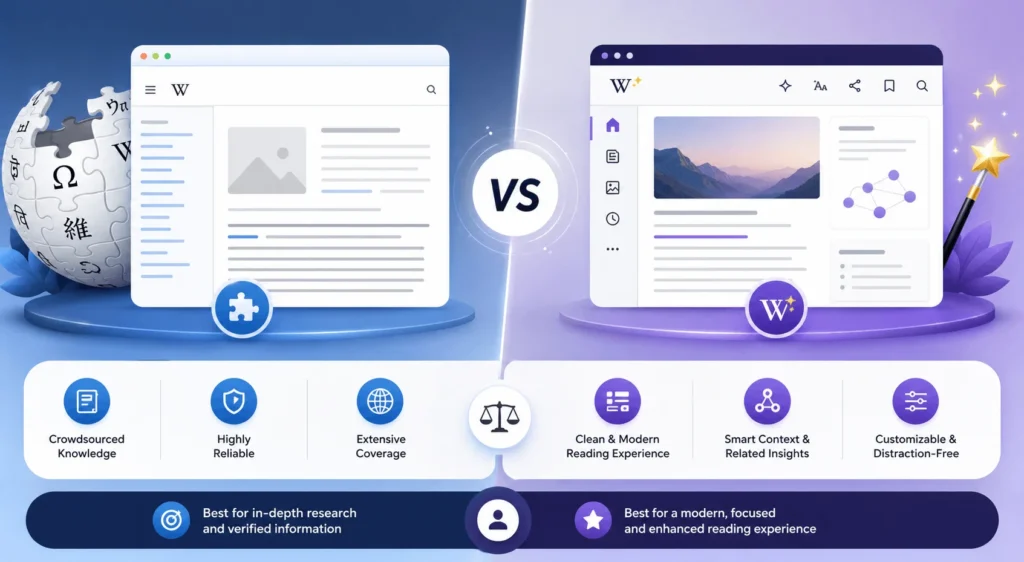
    Wikiwand Extension: Honest Review & What It Does in 2026

    Wikipedia is the world’s greatest rabbit hole. You start reading about the Moon and somehow end up on a page about medieval cheese-making forty minutes later. But let’s be honest — the interface makes that journey unnecessarily painful. Walls of text, disappearing navigation and zero dark mode support have frustrated readers for years. The Wikiwand extension changes all of that instantly. 

    It wraps every Wikipedia article in a clean, modern shell without touching a single word of the original content. Whether you’re a student, researcher or just endlessly curious, this browser extension transforms your reading experience from a chore into something genuinely enjoyable. Here’s everything you need to know in 2026.

    1. What Is Wikiwand and How Does It Work?

    The Wikiwand extension is a free browser tool that automatically upgrades every Wikipedia article you visit. It works silently in the background. You keep browsing Wikipedia as usual but every article now opens inside Wikiwand’s clean reader interface instead. No extra clicks needed. Just install it once and it handles everything else for you.

    The magic happens through a Wikipedia redirect mechanism. When you click any Wikipedia link, the extension intercepts it and loads the identical article on wikiwand.com with a completely redesigned layout. The content stays exactly the same. Only the Wikipedia interface changes — and the difference is genuinely dramatic the first time you see it.

    Who Built Wikiwand and When Did It Launch?

    Wikiwand Wikipedia was featured on TechCrunch, Lifehacker, Gizmodo, Fast Company and The Next Web after launch. That kind of press coverage from respected tech publications signals this is a serious, well-built Wikipedia modernized tool — not just another throwaway browser addon collecting dust in the Chrome Web Store.

    2. Why Does Wikipedia Need a Visual Overhaul in 2026?

    Honestly, Wikipedia’s desktop design is a problem. The Wikipedia cluttered interface packs text, boxes, navigation links and sidebars into every corner of your screen. For students and researchers in 2026, this Wikipedia busy layout creates unnecessary friction during what should be a smooth reading experience. Understanding user experience basics makes it immediately clear why Wikipedia’s outdated design fails modern readers so badly.

    Modern readers expect more. They want clean reader interface designs, dark mode support, fast content navigation and layouts that breathe. Wikipedia simply hasn’t kept pace with how people consume information today. That gap is exactly where the Wikiwand extension steps in and delivers something genuinely useful.

    What Do Users Actually Complain About Wikipedia’s Design?

    The most common complaints center around the Wikipedia navigation problem — links are oddly placed, the table of contents disappears when you scroll and images are small and poorly integrated. There’s no native Wikipedia dark mode either. These aren’t minor annoyances — for heavy users they add up fast.

    3. Key Features of the Wikiwand Extension

    The Wikiwand Chrome extension goes far beyond cosmetic changes. It adds visual timelines for historical articles, a Top Questions panel for instant topic summaries, an AI chat copilot for contextual questions and a fact checking tool that cross-references Wikipedia’s claims against live sources. These are genuinely powerful additions — not gimmicks. If you’re interested in how AI built in tools are reshaping everyday browsing, check out this guide on top AI humanizer tools to see how AI is quietly upgrading familiar platforms everywhere.

    Beyond the AI features, Wikiwand Wikipedia delivers a rich set of reading enhancements. You get hover preview cards on every link, a fixed navigation sidebar that stays visible while you scroll, full width cover photo headers, multi-language search with thumbnail support and an article quality score that rates how reliable each article is. It’s a complete user interface upgrade.

    The AI Features Inside Wikiwand — Are They Actually Useful?

    The Chat copilot is genuinely impressive. It understands exactly what article you’re reading and answers follow-up questions with real depth and accuracy. The fact checking tool goes even further — it compares Wikipedia’s language versions, cross-references live sources and helps you verify claims independently. For researchers, these AI built in features alone justify the install.

    FeatureAvailableNotes
    Visual Timelines✅ YesFor articles with historical context
    Top Questions✅ YesFast topic overview alongside article
    AI Chat Copilot✅ YesContext-aware reading assistant
    Fact Check Tool✅ YesCross-references live sources
    Dark Mode✅ YesMultiple theme options
    Fixed Table of Contents✅ YesAlways visible while scrolling
    Hover Previews✅ YesQuick preview on link hover
    Multi-Language Search✅ YesWith thumbnail support
    Article Quality Score✅ YesRates article reliability
    Full-Width Cover Photos✅ YesImmersive header images
    Font Customization✅ YesSize, type and layout options
    Image Gallery✅ YesImproved media display

    4. How to Install Wikiwand on Your Browser (Step-by-Step)

    Installing the Wikiwand extension takes under sixty seconds. No account creation needed for the free version. You simply add it from the Chrome Web Store or Firefox Add-ons marketplace and it activates immediately. The moment installation completes, open any Wikipedia article and the transformation happens automatically.

    The Wikiwand Firefox addon works just as smoothly as the Chrome version. Both versions require zero configuration after installation. No settings to adjust, no accounts to create and no tutorials to watch. It’s genuinely one of the most frictionless extension installation experiences available in 2026.

    Step-by-Step Installation Guide

    Follow these steps and you’ll be reading a transformed Wikipedia within sixty seconds:

    1. Open Chrome, Firefox or any Chromium-based browser on your device
    2. Visit the Chrome Web Store or Firefox Add-ons marketplace
    3. Search for “Wikiwand — Wikipedia Modernized” in the search bar
    4. Click “Add to Chrome” or “Add to Firefox” on the extension page
    5. Confirm any extension permissions prompts that appear on screen
    6. Open any Wikipedia article to watch Wikiwand activate automatically
    7. Visit wikiwand.com to explore and customize your personal settings

    5. Wikiwand Reading Experience — Fonts, Dark Mode and Layout

    The reading experience inside Wikiwand feels like switching from a cluttered bulletin board to a premium digital magazine. Clean margins, larger images, beautiful typography settings and a fixed navigation sidebar that never disappears as you scroll. It’s immediately obvious why this extension has been featured across major tech publications since launch.

    Font customization is one of the most appreciated features. You can switch between multiple font families, adjust text size and control layout width to match your reading preference. The theme options include dark, sepia, high-contrast and several other carefully designed modes. Wikipedia dark mode through Wikiwand is smooth and genuinely easy on the eyes during late-night research sessions.

    Does Wikiwand’s Dark Mode Actually Work Well?

    Yes — and it works better than most browser-level dark modes. The dark mode implementation is thoughtful rather than just inverting colors. Text contrast, image rendering and background tones are all carefully balanced. For anyone doing extended research after sunset, the deep reading experience this creates is noticeably more comfortable than anything Wikipedia offers natively.

    6. Wikiwand Pricing Plans — Free vs Paid, Is It Worth It?

    The free tier of the Wikiwand extension is genuinely impressive. It includes the improved layout, dark mode, hover preview cards, fixed navigation sidebar and basic AI features — all without creating an account. For casual Wikipedia users, the free version covers everything you’ll realistically need on a daily basis.

    The paid plans unlock deeper capabilities. The $4/month plan removes ads and gives you full access to advanced AI chat features and complete page personalization controls. The $10/month tier adds priority support and premium theme options. For students, researchers and heavy Wikipedia knowledge base users, the $4 plan delivers strong value for daily use.

    Is the Paid Plan Actually Worth It?

    For most casual readers the free tier is more than enough. However, if you spend serious time inside Wikipedia for research, writing or knowledge discovery, the $4 plan is a reasonable investment. The ad-free experience alone makes focus easier. The advanced AI features make it a genuinely useful browser productivity tool rather than just a cosmetic upgrade.

    PlanPriceKey Features
    Free$0/monthImproved layout, dark mode, hover previews, basic AI
    Plus$4/monthAd-free, advanced AI chat, full personalization
    Pro$10/monthAll features, priority support, premium themes

    7. Wikiwand vs Wikipedia — What Actually Changes?

    Here’s the honest reality. Wikipedia gives you raw, accurate information inside a Wikipedia article layout that hasn’t meaningfully evolved in years. Wikiwand Wikipedia gives you that exact same information wrapped inside a modern layout built specifically for how people actually read in 2026. The content is identical — the experience is completely different.

    Everything that matters stays the same. All article content, sourcing, editing history and citation links remain untouched. You can switch back to the original at any time by clicking the “Read in Wikipedia” button at the top of any article. The Wikipedia alternative view Wikiwand provides is purely additive — nothing is removed or altered.

    Can You Still Access Original Wikipedia Through Wikiwand?

    Absolutely yes. Every single article displayed through the Wikiwand extension includes a clearly visible “Read in Wikipedia” button. One click and you’re back on the standard online encyclopedia interface immediately. You never lose access to anything — you simply gain a dramatically better default digital reading tool for everyday use.

    FeatureWikipediaWikiwand
    LayoutCluttered, datedClean, modern
    Dark Mode❌ Not native✅ Built-in
    AI Features❌ None✅ Chat + Fact Check
    Font Control❌ None✅ Full control
    Hover Previews❌ Basic✅ Rich previews
    Timeline View❌ None✅ Visual timelines
    Table of ContentsScrolls awayFixed sidebar
    CostFreeFree + Paid tiers

    8. Wikiwand Browser Compatibility and Permissions Explained

    The Wikiwand extension works on Chrome, Firefox, Edge and all major Chromium-based browsers in 2026. The Wikiwand Firefox addon and Chrome versions both receive regular updates. Whether you’re on Windows, Mac or Linux, compatibility is solid across the board for everyday users.

    The extension permissions question comes up often and deserves a straight answer. Wikiwand requests access to Wikipedia pages specifically so it can perform the Wikipedia link redirect. It does not collect personal data, access your passwords or monitor your browsing outside of Wikipedia. The permission scope is narrow and specific — exactly what you’d want from a trustworthy browser productivity tool.

    Why Is Wikiwand Not Redirecting? Common Fix Explained

    The Wikiwand not redirecting issue is one of the most searched problems with this extension. The most reliable Wikiwand redirect fix is switching your Wikipedia search URL to https://www.wikiwand.com/en/articles/%S instead of the standard Wikipedia search URL. This bypasses the extension redirect issue entirely and takes you directly to the Wikiwand version of any article without needing a page refresh.

    9. Best Extensions to Use Alongside Wikiwand in 2026

    Pairing the Wikiwand extension with the right companion tools creates a genuinely powerful research environment inside your browser. Think of it like assembling a reading toolkit — each tool handles one specific job exceptionally well. Dark Reader is the obvious first pairing for anyone who wants consistent dark mode across every website, not just Wikipedia. For a broader look at how AI-powered tools are transforming everyday workflows in 2026, this roundup of best AI website builders shows just how much the landscape has shifted in a short time.

    For anyone taking notes while researching, LanguageTool handles grammar and spell checking directly inside your browser without switching tabs. Tree Style Tab organizes your open Wikipedia articles into a clean vertical sidebar — essential when you’re deep in a research rabbit hole with twenty tabs open. These tools complement the browser productivity tool ecosystem Wikiwand anchors perfectly.

    Top 4 Extensions That Work Perfectly With Wikiwand

    ExtensionWhat It DoesWhy It Pairs Well With Wikiwand
    Dark ReaderSystem-wide dark mode for all websitesCreates consistent dark reading across every tab
    LanguageToolGrammar and spell checker in-browserPerfect for note-taking during research sessions
    Search by ImageReverse image search toolVerify images found inside Wikipedia articles
    Tree Style TabVertical tab organization sidebarManage dozens of Wikipedia research tabs cleanly

    Final Verdict — Is the Wikiwand Extension Worth Installing in 2026?

    Here’s the bottom line. The Wikiwand extension takes something you already use — Wikipedia — and makes it genuinely enjoyable to spend time inside. It’s fast, free and installs in under sixty seconds. The visual overhaul is immediately obvious and the AI features add real depth beyond pure cosmetics. For students, researchers, curious minds and anyone who spends time inside the world’s largest online encyclopedia, this upgrade is absolutely worth it. Visit wikiwand.com today, install the extension and experience Wikipedia modernized the way it should have always looked.

    FAQs

    Is Wikiwand the same as Wikipedia?
    Wikiwand is not Wikipedia — it is a browser extension that reimagines how you read Wikipedia by giving it a cleaner, more modern interface. The content is still Wikipedia’s, just displayed more beautifully.

    Is Wikiwand AI?
    Wikiwand is not an AI tool — it is a reading interface layered on top of Wikipedia. It enhances the visual experience but does not generate or modify any content using artificial intelligence.

    What are the benefits of using Wikiwand?
    Wikiwand transforms Wikipedia’s cluttered layout into a distraction-free, visually polished reading experience with better typography, a sticky table of contents, and faster navigation. It makes researching topics significantly more comfortable and efficient.

    Is Wikiwand a reliable source of information?
    Since Wikiwand pulls all its content directly from Wikipedia, its reliability is identical to Wikipedia’s — accurate for general knowledge but not recommended as a sole source for academic or professional research.

  • Sitemap Generator by SpellMistake: Honest Review 2026

    Sitemap Generator by SpellMistake: Honest Review 2026

    Every website owner has been there. You publish great content, optimize your pages, and wait for Google to notice. Days pass. Nothing. The real culprit hiding behind the scenes is often a missing or broken sitemap. The sitemap generator by SpellMistake steps in exactly here — offering a fast, no-fuss solution for anyone who wants their pages discovered without touching a single line of code. 

    Whether you run a personal blog, a growing online store, or a business website, this free sitemap generator changes how search engine crawling works for you. This honest 2026 review covers everything — features, limitations, sitemap errors, and whether this XML sitemap generator online truly deserves your trust.

    1. What Is an XML Sitemap and Why Does It Matter for SEO?

    Think of an XML sitemap as a GPS for Google. Without it, Googlebot wanders your website hoping to find every page through links alone. That works sometimes. However, it fails badly on large or newly launched sites where internal linking is still thin.

    Your sitemap file hands search engines a complete, organized list of every page you want indexed. It also signals indexing speed, page discovery priorities, and how fresh your content is. Before diving deeper, it helps to understand search engine basics so you know exactly why this step matters so much for your rankings. According to Google’s official documentation, sitemaps are especially critical for sites with orphan pages — pages with zero internal links pointing to them.

    XML Sitemap vs HTML Sitemap — What’s the Difference?

    An XML sitemap talks directly to search engines. An HTML sitemap is built for human visitors navigating your site. You need both ideally. However, for search engine crawling and crawl budget optimization, the XML version is what truly moves the needle for your rankings.

    2. What Is the Sitemap Generator by SpellMistake?

    The Sitemap Generator by SpellMistake is a free, browser-based tool living at spellmistake.com. You paste your URL, hit generate, and download a clean sitemap.xml file within seconds. No plugins. No coding. No account needed.

    What makes it stand out is its single-purpose design. Unlike bloated SEO suites that overwhelm beginners, this SpellMistake sitemap tool focuses entirely on one job — building a valid, submit-ready XML sitemap generator online experience that anyone can use immediately.

    Is SpellMistake a Trustworthy SEO Tool Platform?

    Spellmistake.com offers a growing suite of free SEO best practices tools including keyword research, meta tag generators, and grammar checkers. The sitemap tool fits naturally into this ecosystem. It’s built for real users — not enterprise teams with deep pockets.

    3. Key Features of the Sitemap Generator by SpellMistake

    The free sitemap generator runs on automated XML sitemap creation that crawls your entire domain from the root URL outward. It follows every internal link it finds and collects all accessible pages automatically. Think of it like a postal worker who maps every house on the street before making deliveries — thorough and systematic.

    Duplicate URL filtering quietly cleans your output behind the scenes. Session IDs, pagination variants, and tracking parameters often create dozens of identical URL versions. This tool catches and removes them before they clutter your sitemap file and confuse Googlebot during crawling.

    Does It Support Large Websites?

    Yes — but with limits. The standard sitemap protocol enforces a strict 50,000 URL limit per file with a maximum uncompressed size of 50MB according to sitemaps.org. Sites exceeding that need a sitemap index file linking multiple sitemaps together. SpellMistake handles URL discovery well but leaves index splitting to you manually.

    FeatureSpellMistakeXML-Sitemaps.comScreaming Frog
    Free to Use✅ Yes✅ Yes (500 URL cap)✅ Yes (500 URL cap)
    No Installation✅ Yes✅ Yes❌ Desktop App
    Large Site Support✅ Yes❌ Limited✅ Yes
    Custom Priority Values✅ Yes✅ Yes✅ Yes
    Duplicate URL Filtering✅ Yes❌ Limited✅ Yes
    Media Sitemaps❌ Limited❌ Limited✅ Yes
    Auto-Update❌ Manual❌ Manual✅ Yes

    4. How to Use the Sitemap Generator by SpellMistake (Step-by-Step)

    Here is the truth — this whole process takes under two minutes for most websites. You don’t need a developer. You don’t need a tutorial video. The sitemap generation process is genuinely that straightforward, and that’s exactly what makes this website sitemap tool worth your time.

    Once your sitemap.xml file downloads, upload it to your root directory so it sits at yourdomain.com/sitemap.xml. Then add one reference line inside your robots.txt file so search engines can find it automatically without waiting for a manual submission ping.

    Step-by-Step Walkthrough

    Follow these steps exactly and you’ll have a working sitemap live within minutes:

    1. Visit spellmistake.com and open the Sitemap Generator tool
    2. Paste your full website URL including https:// — consistency matters here
    3. Click “Generate Sitemap” and let the crawl run completely
    4. Review discovered URLs carefully — remove any admin, login or staging pages
    5. Adjust priority values (0.0 to 1.0) — set your homepage to 1.0 and tag archives to 0.3
    6. Set change frequency (daily, weekly, monthly) based on how often each page updates
    7. Download your finished sitemap.xml file to your computer
    8. Upload the file to your site’s root directory via FTP or your hosting file manager
    9. Submit the sitemap URL inside Google Search Console under the Sitemaps section
    10. Add this line to your robots.txt file: Sitemap: https://yourdomain.com/sitemap.xml

    5. How to Submit Your Sitemap to Google Search Console

    Sitemap submission is where most beginners stop too early. Generating the file is only half the job. Submitting it to Google Search Console is what actually triggers faster page indexing and gives you visibility into how many URLs Google successfully crawls versus ignores.

    Never skip Bing Webmaster Tools either. Most SEOs focus entirely on Google and leave Bing traffic completely on the table. Bing processes sitemaps independently and submitting there takes less than sixty seconds at bing.com/webmasters.

    How to Add Your Sitemap to robots.txt

    Your robots.txt file should always reference your sitemap location directly. Add this single line at the bottom: Sitemap: https://yourdomain.com/sitemap.xml. This tells every search engine crawling your domain exactly where to find your sitemap — even before you submit it manually anywhere.

    PlatformWhere to GoWhat to Paste
    Google Search ConsoleSitemaps → Add Sitemapyourdomain.com/sitemap.xml
    Bing Webmaster ToolsSitemaps → Submit Sitemapyourdomain.com/sitemap.xml
    robots.txt FileRoot directory text fileSitemap: https://yourdomain.com/sitemap.xml

    6. Common Sitemap Mistakes (SpellMistakes) That Hurt Your SEO

    One wrong character can silence your entire sitemap without a single warning. Sitemap spellmistakes like naming your file sitmap.xml instead of sitemap.xml mean Googlebot simply cannot locate it. Misspelled XML tags like writing <lco> instead of <loc> invalidate the entire file structure immediately. These are exactly the kind of SEO errors that quietly destroy your rankings without any obvious warning sign showing up on your website. 

    Protocol mismatch HTTP HTTPS is another silent killer. If your live site runs on HTTPS but your sitemap lists URLs starting with http://, crawlers receive contradictory signals. Similarly, including noindex pages inside your sitemap creates a direct conflict — you’re telling Google to both find and ignore the same page simultaneously.

    Broken and Redirected URLs — A Silent SEO Killer

    Including broken URLs in sitemap files wastes your precious crawl budget on pages that return 404 errors or trigger 301 redirect chains. Google’s crawler follows those dead ends instead of spending time on your actual content. Only list live, 200-status URLs inside your sitemap — nothing else.

    MistakeSEO ImpactFix
    sitmap.xml wrong filenameSitemap never found by crawlersRename file correctly to sitemap.xml
    <lco> instead of <loc> tagInvalid XML format, pages skippedValidate XML and fix tag spelling
    HTTP URLs on HTTPS siteProtocol mismatch HTTP HTTPS, duplicate signalsUpdate every URL to HTTPS only
    Noindex pages includedContradictory crawl signalsRemove all noindex pages immediately
    404 and redirected URLs listedCrawl budget wasted on dead pagesReplace with final live destination URLs
    Incorrect sitemap file nameSearch engines cannot locate fileUse standard sitemap.xml naming only

    7. How to Detect and Fix Sitemap Errors

    Open your Google Search Console Sitemaps report right now. The submitted vs indexed gap is your most important warning signal. If you submitted 500 URLs but Google only indexed 120, something is broken inside your sitemap file — and it’s costing you organic visibility every single day.

    Run your sitemap through a free XML validator at xmlvalidation.com to catch sitemap errors SEO impact before they snowball. Then manually click five to ten random URLs from your sitemap and confirm they actually load correctly. This simple manual URL check catches errors that automated tools sometimes miss entirely.

    What “Couldn’t Fetch” Error Actually Means

    The sitemap couldn’t be fetched error inside Google Search Console usually means one of three things — your incorrect sitemap file name, a server blocking Googlebot access, or the file simply doesn’t exist at the URL you submitted. Check your root directory first. Then verify your robots.txt isn’t accidentally blocking sitemap access with a Disallow rule.

    8. Sitemap Generator by SpellMistake vs Other Tools

    Here’s the honest truth — the Sitemap Generator by SpellMistake is not trying to compete with Screaming Frog or enterprise crawlers. It occupies a specific and valuable niche. It’s the fastest, cleanest sitemap generator without plugins for small to mid-sized sites that just need a working XML sitemap without complexity or cost.

    Where SpellMistake genuinely wins is against WordPress users who don’t want another plugin slowing their site down. Yoast SEO and Rank Math auto-update sitemaps beautifully inside WordPress — but they’re useless on Shopify, Webflow, custom HTML sites or any non-WordPress platform. For those users, SpellMistake fills the gap perfectly.

    Who Should NOT Use This Tool?

    Be honest with yourself here. If you run a JavaScript-heavy single-page application, SpellMistake’s crawler may miss dynamically rendered pages entirely. Enterprise SEO operations needing scheduled daily sitemap regeneration, advanced canonical logic, or real-time GSC API integration will outgrow this tool quickly. It’s a starting point — not a finish line.

    ToolFreeNo InstallAuto-UpdateBest For
    SpellMistake✅ Yes✅ Yes❌ ManualQuick standalone sitemaps, non-WordPress
    Yoast SEO✅ Yes❌ Plugin✅ YesWordPress users needing automation
    Rank Math✅ Yes❌ Plugin✅ YesWordPress + schema markup users
    Screaming Frog✅ 500 cap❌ Desktop✅ YesDeep technical SEO audits
    XML-Sitemaps.com✅ 500 cap✅ Yes❌ ManualVery small sites under 500 pages

    9. Best Practices for Sitemap Management in 2026

    Sitemap regeneration should never be a one-time task. Active blogs and e-commerce stores need weekly regeneration. Static business sites can comfortably update monthly. The rule is simple — whenever you add pages, delete content, or change your URL structure, regenerate your sitemap immediately. Pair this habit with the SEO tips that actually help your pages rank on Google and you’ll build a technical foundation competitors struggle to catch up with. 

    In 2026, AI search crawling is changing how Google processes site structure signals. Clean, error-free sitemaps now help AI-driven crawlers understand your content hierarchy faster than ever before. Technical SEO 2026 trends confirm that sites with consistently maintained sitemaps see stronger search engine visibility compared to sites with outdated or error-filled files.

    Should You Use Image or Video Sitemaps Too?

    Absolutely — if your site is media-heavy. An image sitemap and video sitemap dramatically improve your visibility inside Google Images and video search results. However, SpellMistake doesn’t natively support these specialized formats. For image sitemap and video sitemap needs, consider supplementing with Google’s Media Sitemaps guide alongside your standard XML output.

    2026 Sitemap Management Checklist:

    TaskFrequencyPriority
    Regenerate sitemap after content changesEvery update🔴 Critical
    Check submitted vs indexed gapMonthly🔴 Critical
    Validate XML structureAfter every regeneration🟠 High
    Submit to Google and BingAfter every regeneration🟠 High
    Remove 404 and redirect URLsMonthly audit🟠 High
    Update robots.txt sitemap referenceAfter URL changes🟡 Medium
    Review priority values for key pagesQuarterly🟡 Medium
    Check Core Web Vitals for listed pagesMonthly🟡 Medium

    Final Verdict — Is the Sitemap Generator by SpellMistake Worth It?

    Here’s the bottom line. If you need a fast, free, no-nonsense XML sitemap generator online that works on any website without plugins or coding — the Sitemap Generator by SpellMistake genuinely delivers. It won’t replace an enterprise crawler. However, for bloggers, small business owners, non-WordPress developers and lean SEO teams, it’s one of the most practical tools available today.

    Generate your sitemap, upload it, submit it to Google Search Console and Bing Webmaster Tools, reference it in your robots.txt and make regeneration a habit. That single workflow — done consistently — builds a technical SEO foundation that supports everything else you’re doing. Visit spellmistake.com today and give your pages the discovery they deserve.

    FAQs

    Can ChatGPT create a sitemap?
    ChatGPT cannot directly crawl your website and generate a sitemap file. However, it can help you write XML sitemap code manually if you provide your URLs yourself.

    What not to include in a sitemap?
    Never include noindex pages, broken URLs, 301 redirect links, duplicate URLs, login pages, admin pages, or any page blocked inside your robots.txt file.

    What is a sitemap generator?
    A sitemap generator is an online tool that automatically crawls your website and creates a structured XML sitemap file that helps search engines discover and index your pages faster.

    What is the AI tool to create a sitemap?
    Several AI-powered tools like Bing Webmaster Tools, Semrush, and the SpellMistake sitemap tool can generate sitemaps quickly. However, for a completely free and plugin-free experience, the free sitemap generator at spellmistake.com remains one of the simplest options available in 2026.

  • GrowthScribe Review 2026: Is This Agency Worth It?

    GrowthScribe Review 2026: Is This Agency Worth It?

    By Marcus Rivera | Senior Digital Marketing Strategist | Last Updated: May 2026

    About the Author

    Marcus Rivera is a Senior Digital Marketing Strategist with 11 years of experience evaluating marketing agencies, SaaS tools, and growth frameworks for early-stage startups. He has worked with over 60 B2B and tech companies across North America and Europe, helping founders build marketing systems that scale without adding full-time headcount. Marcus has tested more than 40 marketing agencies across verticals including healthcare tech, logistics software, and direct-to-consumer wellness — and writes independent reviews based on public evidence, client interviews, and first-hand evaluation where access is available. He holds a Google Analytics certification and has contributed to startup marketing playbooks used by accelerators in the U.S. and Pakistan.

    What Is GrowthScribe? A Quick Overview

    Most agencies promise the moon. Very few show you what they actually did to get there. That’s the gap GrowthScribe has been trying to close since it was founded in 2016 out of Newark, Delaware.

    GrowthScribe is a growth marketing agency that serves early-stage B2B companies, tech startups, and wellness brands. Their positioning is straightforward: instead of running disconnected campaigns across multiple channels, they build integrated growth systems — where strategy, branding, funnels, and content work together toward one measurable outcome.

    That’s a meaningful claim in an industry full of one-trick specialists. Whether the reality lives up to it is exactly what this review digs into.

    Who Actually Searches for “GrowthScribe”? Understanding the User Intent

    Before breaking down the agency itself, it’s worth understanding why someone lands on this page in the first place. Search traffic for “GrowthScribe” tends to fall into three buckets:

    Evaluators — Founders, marketing leads, and startup operators who’ve heard the name (from a referral, a LinkedIn post, or a proposal call) and want a third-party perspective before they commit.

    Comparison shoppers — People who are shortlisting growth agencies and want to understand how GrowthScribe stacks up against alternatives like RankTRA, DualMedia, or in-house hiring.

    Current clients and past collaborators — Teams looking for case studies, portfolio samples, or additional context on services they’re already using.

    This review is written for all three groups. Evaluators will find a clear breakdown of services and red flags to watch for. Comparison shoppers will find an honest view of GrowthScribe’s strengths and limitations relative to the broader market. And existing clients will find useful context on what they can realistically expect.

    GrowthScribe Services: What They Actually Offer (And What Gets Used Most)

    GrowthScribe lists a broad service stack on their website. Here’s what that covers in practice:

    Web Design and Conversion-Focused Development

    Website work sits at the core of most GrowthScribe engagements. The agency builds primarily on WordPress, with managed hosting bundled into several of their packages. Client reviews on Trustpilot consistently mention fast mobile load times and clean checkout flows as deliverables they were happy with — one course creator even reported their first sale the same week the site went live.

    The agency’s Behance portfolio backs this up with polished work across logistics branding, B2B service identities, and product design — all with a recognizable strategic intent behind the aesthetics rather than just surface-level visual work.

    Branding as a Conversion Tool (Not Just Aesthetics)

    One differentiator worth noting: GrowthScribe treats branding as a sales asset, not a style exercise. Their team maps user journeys, identifies ideal customer profiles, and deliberately designs brand assets to repel poor-fit leads while attracting the right ones.

    That approach is particularly valuable for B2B and tech brands, where the buyer journey is longer and brand trust carries more weight than it does in impulse-purchase categories.

    Funnel Development and Email Marketing

    Sales funnel work and email marketing automation make up a significant part of their service offering for startups. GrowthScribe integrates tools like Mailerlite and Zapier to build automated sequences, helping clients capture and nurture leads without manual follow-up eating into the founder’s time. For B2B companies that also need to sharpen their prospecting layer, it’s worth understanding how dedicated intelligence platforms fit alongside agency-built funnels — this ZoomInfo B2B sales intelligence platform guide breaks down where that kind of tooling adds the most value.

    Social Media Marketing and Content

    GrowthScribe handles social media management, particularly for brands that need consistent organic presence alongside their other marketing channels. One unusual note: their website references a meme page partnership network as part of their social reach strategy. That’s a non-standard tactic, and whether it translates to meaningful results for a given client is worth probing directly before you factor it into your expectations.

    IT Auditing and Technical Stack Review

    A less-discussed service on their roster is IT auditing — specifically reviewing how software tools function within a broader technical infrastructure. This is relevant for tech-focused clients who want a single agency touching both the marketing and the operational tooling side.

    Copywriting and SEO

    Copywriting is listed in their service stack, though this is one area where independent review platforms like Clutch flag some inconsistency. A few client reviews mention that copywriting quality required more back-and-forth than expected. It’s worth asking to see copywriting samples before you scope a project that depends heavily on written content. If your content and SEO goals are a core part of the engagement, pairing agency work with a dedicated optimization layer — like the one covered in this Frase AI SEO content optimization tool guide — can help you audit and validate what gets produced.

    The AIDA Framework: How GrowthScribe Structures Its Strategy Work

    GrowthScribe references the AIDA framework (Attention, Interest, Desire, Action) as the backbone of their strategic process. In plain terms, this means they build every engagement around a sequential customer journey:

    • Attention — Making the right audience aware that your brand exists
    • Interest — Creating enough relevance for them to engage further
    • Desire — Building trust and differentiation so they prefer you
    • Action — Converting that desire into a transaction or qualified lead

    Applied properly, this model prevents the common agency failure of doing tactically impressive work (a beautiful website, a high-follower social presence) that doesn’t actually move people toward a purchase. When GrowthScribe talks about “growth systems,” this is the architecture underneath it.

    GrowthScribe Reviews: What Real Clients Say

    The Positive Patterns

    Across Trustpilot, Clutch, and DesignRush, a few themes show up repeatedly in GrowthScribe’s positive reviews:

    Reliability after bad agency experiences. Multiple reviewers describe coming to GrowthScribe after frustrating runs with other vendors who disappeared, missed deadlines, or over-promised. The word “reliable” shows up in enough reviews that it feels like a genuine differentiator rather than a cherry-picked quote.

    Founder-level involvement. Several clients specifically mention Kartik (the founder) by name as their primary point of contact. For startups that have been burned by agencies that assign junior staff after the sales call, having founder-level attention is meaningful.

    Technical execution quality. Site speed, mobile performance, and clean checkout functionality get consistent praise. These are measurable, verifiable outcomes — harder to fake in reviews than vague satisfaction claims.

    The Honest Limitations

    GrowthScribe’s review profile on Clutch also surfaces some useful friction points:

    Copywriting quality can vary. A handful of reviews mention that written content required more revision cycles than expected. If your project is copy-heavy — a content marketing program, a brand narrative, a landing page sequence — build extra time into your timeline for review rounds.

    Slower project starts. Some reviewers noted that ramp-up time was longer than anticipated. For startups with urgent go-to-market deadlines, this is worth raising explicitly in scoping conversations.

    Small review sample size. At 19 Trustpilot reviews as of mid-2026, with a cluster of submissions in a concentrated window, the dataset is thin. A 4.4 score with zero negative reviews is encouraging but not yet statistically robust. Asking for direct client references outside of public platforms is a reasonable step.

    GrowthScribe Pricing: What to Expect

    GrowthScribe does not list a fixed pricing menu on their website — a common practice for agencies that scope custom engagements. What’s available through third-party platforms gives a rough anchor: one project documented on Clutch involved approximately $3,500 for branding and website optimization.

    Their hourly rate range, based on Clutch listings, sits between $50 and $99, with a minimum project size around $1,000. That positions them as accessible for seed-stage startups and bootstrapped founders, rather than Series A companies that would typically engage larger agency networks.

    Before signing any agreement, it’s reasonable to ask for:

    • A scoped proposal with line-item deliverables
    • Clarity on who will be executing the work (founder-led vs. delegated)
    • Defined revision rounds for deliverables like copy and design
    • Reporting frequency and what metrics they track to define success

    GrowthScribe vs. Competitors: How It Stacks Up

    The “GrowthScribe” keyword search also surfaces adjacent agencies like RankTRA and DualMedia. Here’s a high-level comparison frame to help calibrate:

    GrowthScribe vs. generalist digital marketing agencies: GrowthScribe’s deliberate focus on B2B, tech, and wellness is a meaningful differentiator. Generalist agencies adapt templates. GrowthScribe, by their own account, runs playbooks that have been tested specifically within these verticals.

    GrowthScribe vs. freelancer networks: For early-stage founders, the alternative to an agency is often a patchwork of freelancers (one for design, one for copy, one for ads). GrowthScribe’s value proposition is coordination — one team that connects strategy, creative, and execution — which reduces the management overhead that freelancer models create.

    GrowthScribe vs. in-house hire: An in-house marketing hire at the level that could replicate what GrowthScribe offers would cost considerably more than their project and retainer rates, once salary, benefits, and ramp time are factored in. For companies under 20 employees, the math tends to favor agency partnerships at this stage.

    Who Is GrowthScribe Best For?

    Based on the public evidence available — their service stack, client reviews, and positioning — GrowthScribe fits best for:

    Early-stage B2B startups that need a functioning digital presence (site, brand, basic funnel) and don’t have a marketing hire yet. If budget is a constraint alongside the agency cost, it’s also worth reviewing affordable marketing SaaS platforms that can complement agency work without significantly increasing your monthly spend.

    Tech founders who want to stop managing multiple vendors and need one team that can hold the technical and creative work together.

    Wellness brands building trust-first communities and need marketing that feels authentic rather than promotional.

    It’s probably not the right fit for:

    Companies that need a heavy content marketing program (10+ blog posts per month, deep SEO content strategy) — the copywriting variability in reviews suggests this isn’t where the agency’s strongest execution lives.

    Brands with complex paid media needs — the public record doesn’t show a strong track history of performance marketing at scale.

    High-growth companies past Series A — at that stage, the expectations on reporting sophistication, team size, and vertical specialization typically outpace what a boutique agency this size can offer.

    How to Evaluate GrowthScribe Before Committing

    The standard advice for any agency applies here with extra emphasis:

    Start with a bounded project. A single landing page, a brand identity package, or a short email sequence gives you real data on communication patterns, revision quality, and execution speed before you commit to a retainer.

    Ask for case studies with measurable outcomes. “We helped a logistics brand with their identity” is less useful than “we rebuilt a B2B tech site that reduced bounce rate by 28% and increased demo requests by 40%.” Push for specifics.

    Track performance in Google Search Console, not just agency reports. If GrowthScribe is handling any SEO or content work, insist on access to first-party data. Estimated traffic numbers from tools like Ahrefs are useful but not the same as actual clicks and impressions. Understanding how Google ranks and evaluates content in 2026 will also help you ask sharper questions when reviewing an agency’s SEO deliverables.

    Clarify the communication structure upfront. Multiple reviews praise direct access to Kartik specifically. If founder-level attention is part of why the positive reviews exist, understand when and how that contact changes as the agency grows.

    A Note on the 2025–2026 Google Updates and What They Mean for Agency-Produced Content

    If your primary goal in working with GrowthScribe is organic search visibility, the 2024–2026 Google core and helpful content updates are directly relevant to your evaluation. Google has significantly increased its scrutiny of content that appears generic, mass-produced, or lacking genuine expertise signals.

    Concretely, this means any agency you hire for content work should be able to demonstrate:

    • Author credentials and real first-hand experience behind published content
    • Original insights, data, or case studies — not recycled talking points
    • Topical depth within a defined subject area, not scattered one-off posts
    • Proper internal linking structure that builds genuine topical authority over time

    If you want to go deeper on exactly how to build that kind of authority for your own brand, this guide on building topical authority with an E-E-A-T strategy is a practical starting point worth reading before you scope any content-led agency engagement.

    Ask GrowthScribe (or any agency you’re evaluating) to show you examples of content they’ve produced that ranks organically — and check those rankings in Search Console or an independent SEO tool. The gap between what agencies say and what their content actually achieves in search is often revealing.

    Final Verdict: Is GrowthScribe Worth It?

    GrowthScribe is a legitimate, founder-led growth agency with real client outcomes and a clear positioning in the B2B, tech, and wellness space. The evidence points to genuine strengths in web development, branding, and technical reliability — areas where early-stage founders consistently struggle to find good partners.

    The limitations are real too. Copywriting consistency, project ramp time, and a still-developing public track record are honest gaps. None of them are disqualifying for the right client profile, but they’re worth managing with clear expectations upfront.

    If you’re an early-stage startup looking for a single team to connect strategy, brand, and digital infrastructure — and you’re willing to stay involved in the process rather than handing over the keys — GrowthScribe deserves a serious look.

    Start with a scoped project, verify outcomes with first-party data, and make your own call. And if you’re in the process of evaluating multiple agencies and want a framework for how to document and compare them fairly, this guide on how to write SEO-friendly reviews walks through the exact structure that makes comparative content both useful to readers and rankable on Google.

    Frequently Asked Questions

    What does GrowthScribe do?
    GrowthScribe is a growth marketing agency based in Newark, Delaware, founded in 2016. They provide web design, branding, sales funnel development, email marketing, social media management, and managed WordPress hosting, primarily for early-stage B2B, tech, and wellness startups.

    How much does GrowthScribe charge?
    GrowthScribe doesn’t publish a fixed pricing menu. Their hourly rates range from $50–$99 based on third-party listings, with a minimum project size around $1,000. One documented Clutch project came in at approximately $3,500 for branding and website work.

    Is GrowthScribe legit?
    Yes. GrowthScribe has verified listings on Clutch, Trustpilot, DesignRush, and LinkedIn, with consistent client feedback and a publicly available portfolio on Behance. As with any agency, prospective clients should evaluate through a small trial project before committing to a retainer.

    Who is GrowthScribe best for?
    Early-stage B2B startups, tech founders, and wellness brands that need a connected growth system — combining strategy, branding, web development, and digital marketing — without building an in-house team.

    Does GrowthScribe offer SEO services?
    SEO is part of their broader digital marketing offering, though the agency’s strongest documented results are in web design, branding, and technical WordPress work. If SEO content is a primary goal, ask for documented organic ranking examples before scoping content work.

  • UploadArticle.com: 7 Shocking SEO Benefits You Must Know in 2026

    UploadArticle.com: 7 Shocking SEO Benefits You Must Know in 2026

    In today’s crowded digital landscape, getting your content discovered without burning through an advertising budget feels nearly impossible. That is where UploadArticle.com steps in as a genuine game-changer. This free article submission platform empowers writers, bloggers, and business owners to publish original content, earn quality backlinks, and expand their reach across search engines without spending a single rupee or dollar.

    Whether you are chasing stronger domain authority, building a credible author profile, or simply trying to grow your organic traffic, this platform offers a surprisingly powerful starting point. Smart publishers in 2026 are already using it quietly — and the results speak for themselves.

    1. What is UploadArticle.com?

    UploadArticle.com is a free online article publishing and content submission website that allows writers, bloggers, and businesses to publish articles for a wider audience. Think of it as a public library for digital content — anyone can walk in, contribute knowledge, and reach thousands of readers already browsing the shelves. It covers a wide range of topics including technology, business, health, lifestyle, education, finance, science, and travel. That breadth makes it genuinely useful for almost any niche you can think of.

    What makes this content publishing site stand out is its simplicity. You do not need a web developer, a designer, or a technical background to get started. Beginners in the USA are using it daily to publish articles online, gain exposure, and start building a real digital presence from scratch. It acts as a bridge between your ideas and the audience actively searching for them on Google right now.

    How Does UploadArticle.com Actually Work?

    How uploadarticle.com works is refreshingly straightforward. You create a free account, write your article using the built-in editor, and submit it for review. Once approved, your article goes live with your author profile attached — complete with your bio, credentials, and a backlink to your website. Think of it like LinkedIn for writers. You show up, you share expertise, and the right people find you because of it.

    2. Is UploadArticle.com Legit and Safe to Use?

    Is uploadarticle.com legit? Yes — and here is why you can trust that answer. The platform operates with defined editorial standards, requires original content, and runs on HTTPS encryption for basic security. It is not a fly-by-night spam directory. Real articles, real authors, and real editorial review processes separate it from the low-quality link farms that have plagued the internet for years. You can verify domain reputation using trusted tools like Moz or Ahrefs before you invest time publishing there.

    That said, is uploadarticle.com safe to use depends on how you use it. Avoid submitting sensitive personal information beyond your name and email. Treat it as one smart layer inside a broader off-page SEO strategy — not your entire plan. When used that way, it is a completely legitimate and genuinely useful platform. The content quality guidelines it follows help maintain a standard that protects both writers and readers from wasted time.

    What Real Users Are Saying in 2026

    Writers across the USA consistently report improved backlink profiles after publishing regularly on the platform. Digital marketers use it as a reliable part of their content distribution campaigns. Bloggers love the zero-cost barrier. One analogy captures it perfectly — publishing on UploadArticle.com is like getting a free billboard on a busy highway. Smart marketers never walk past free exposure. They grab it, use it well, and let it compound over time.

    3. Key Features and Benefits of UploadArticle.com

    The key features of this platform go well beyond basic publishing. You get a rich text editor that requires zero coding knowledge. You get a personal author profile page where your bio, credentials, and website links live permanently. Every article you publish is automatically formatted for mobile, tablet, and desktop — meaning your audience reach never suffers because of device compatibility issues. The content management dashboard lets you track, edit, and manage everything from one clean location.

    What truly sets this article upload website apart is what it does not charge you for. There are no subscription fees, no revenue-sharing models, and no paywalls blocking readers from finding your work. Compare that to platforms that make writers wait months before earning anything, or charge readers just to access your articles. UploadArticle.com removes every barrier between your content and your audience — and that is a genuinely rare thing in 2026.

    FeatureUploadArticle.comMediumHubPages
    Free Publishing✅ Yes✅ Yes✅ Yes
    Backlinks Allowed✅ Yes⚠️ Limited⚠️ Limited
    No Approval Waitlist✅ Yes✅ Yes❌ No
    Author Profile Page✅ Yes✅ Yes✅ Yes
    SEO Optimization Support✅ Yes⚠️ Partial⚠️ Partial
    Revenue Sharing Required❌ No❌ No✅ Yes
    Content Ownership✅ Full⚠️ Partial❌ Limited

    Features That Set It Apart From Competitors

    Unlike HubPages, there is no “Boot Camp” approval system that frustrates new writers for weeks. Unlike Medium, there is no paid membership wall cutting off organic search traffic to your articles. You keep full content ownership — edit, update, or remove your work anytime without complicated permission requests. For freelance writers and niche bloggers targeting USA audiences, that freedom is not just a nice feature. It is a genuine competitive advantage worth using.

    4. How to Create an Account and Submit an Article (Step-by-Step)

    How to create an account on UploadArticle.com takes less than ten minutes from start to finish. You need nothing more than a valid email address and a willingness to write something useful. Once registered, your author profile becomes your permanent publishing identity on the platform. Fill it out completely — add your bio, credentials, niche expertise, and website link. A complete profile sends strong E-E-A-T signals to Google, which means every article you publish carries more authority weight from day one.

    The account creation and submission form process rewards writers who think strategically. Every article you submit adds another indexed page to your content footprint across the web. Over time, that footprint grows into a recognizable online brand visibility that readers and search engines both reward. This is not guesswork — it is how content syndication and multi-platform publishing has worked for years, and UploadArticle.com makes it accessible to absolutely anyone.

    StepActionPro Tip
    Step 1Create a free account with name and emailUse a professional email address
    Step 2Choose a specific, focused topicPick what you genuinely know well
    Step 3Write and format your articleUse H2/H3 headings, short paragraphs, 800–1,500 words
    Step 4Optimize for SEOPlace focus keyword in title, intro, and one H2 naturally
    Step 5Submit the articleProofread once more before hitting submit
    Step 6Wait for review and approvalTypically a few hours to a few days

    Pro Tips Before You Hit Submit

    Run your article through Grammarly before submitting — clean grammar signals professionalism and improves your approval time significantly. Add at least one relevant image with proper alt text for accessibility and SEO value. Make sure your bio link points directly to your most important web page, whether that is your blog, service page, or portfolio. And never — under any circumstances — submit duplicate content. The duplicate content penalty from Google is real, and no backlink is worth triggering it. If you are unsure whether your content is original, use a plagiarism checker before you hit submit.

    5. SEO Benefits of Publishing on UploadArticle.com

    Does uploadarticle.com help with SEO? Absolutely — and the evidence is not complicated. Quality backlinks remain one of Google’s top three search engine rankings factors in 2026. Every article you publish on this platform creates a real, contextual backlink pointing back to your website. These are not random links from sketchy directories. These are links embedded within relevant, topically matched content — exactly the kind Google’s search engine algorithm values most highly. Each published article is one more indexed digital asset quietly working for your domain authority improvement around the clock.

    The long-term compounding effect is where things get truly exciting. Unlike paid ads that vanish the moment your budget runs dry, articles published today can drive organic traffic generation for months — even years — after you hit publish. Think of paid advertising as cut flowers. Beautiful today, dead tomorrow. Think of content published on a platform like this as an orchard. You plant once, tend occasionally, and harvest continuously. That is what is free article submission worth it for SEO actually looks like in practice — and the answer is a resounding yes. For a deeper breakdown of ranking strategies, this guide on SEO tips to rank your listing on Google is worth your time.

    #SEO BenefitWhy It Matters in 2026
    1Quality BacklinksDirectly boosts domain authority and page rankings
    2Organic Traffic GenerationArticles rank independently and drive sustained visitors
    3Brand Visibility OnlineMore indexed pages mean a wider search footprint
    4Domain Authority ImprovementLinks from established platforms pass genuine authority
    5Keyword DiversityTarget long-tail keywords competitors overlook entirely
    6E-E-A-T SignalsAuthor profiles strengthen Google’s trust in your brand
    7Zero-Cost SEO AssetFree publishing delivers lasting ROI paid strategies cannot match

    Do-Follow vs No-Follow Links — What You Need to Know

    Is uploadarticle.com good for backlinks? Here is the honest answer. Do-follow backlinks pass direct SEO authority from the platform to your website — these are the gold standard of link building. No-follow links do not pass authority in the traditional sense but they still drive real referral traffic and contribute to a natural-looking link profile. Here is the part most people miss — Google actually expects a healthy mix of both types. A backlink profile made entirely of do-follow links looks manipulated. A natural mix looks earned. UploadArticle.com helps you build exactly that kind of legitimate, balanced SEO backlink network that holds up under algorithm scrutiny.

    6. Who Should Use UploadArticle.com: Bloggers, Businesses & Entrepreneurs

    Who can publish on UploadArticle.com? Practically anyone with something valuable to say. Content creators, guest bloggers, small business owners, digital marketers, students, and professional writers all find genuine value here. For bloggers specifically, it solves one of the most frustrating problems in content creation — you write great articles, but only your existing audience ever sees them. Publishing on an external guest posting platform like this puts your work in front of entirely new readers who would never have found your personal blog through search alone.

    For businesses, the value proposition is even stronger. American consumers trust informative, expert-driven content far more than they trust advertisements. A small business in Ohio publishing helpful industry guides on a content distribution platform can compete directly with national brands — not because of budget but because of strategic content placement. Small business marketing has fundamentally shifted in 2026. The winners are not the loudest advertisers. They are the most helpful publishers. UploadArticle.com gives every business that opportunity for free.

    AudiencePrimary BenefitBest Content TypeExpected Outcome
    BloggersPortfolio building + SEO backlinksHow-to guides, listiclesIncreased site traffic + authority
    BusinessesBrand visibility + lead generationIndustry insights, case studiesCustomer trust + qualified leads
    FreelancersWriting portfolio + client attractionExpertise articles, tutorialsNew client inquiries
    EntrepreneursThought leadership + online authorityOpinion pieces, business tipsIndustry recognition
    Digital MarketersOff-page SEO + content distributionStrategy guides, platform reviewsImproved domain metrics

    Real-World Use Cases by Audience Type

    Consider a freelance writer based in Austin, Texas. She published 15 articles on platforms like UploadArticle.com over six months — all showcasing her expertise in health and wellness writing. Those published articles became her portfolio. Clients found her through those articles and hired her for $3,000-per-month retainers. Meanwhile, a small e-commerce business in San Diego started publishing buying guides and product tutorials. Their organic traffic increased by 40% without spending an extra dollar on ads. These are not hypothetical scenarios. This is what consistent, strategic content promotion on the right platforms actually produces in the real world.

    7. Content Guidelines, Quality Standards & What to Avoid

    Understanding the content quality guidelines on UploadArticle.com is not optional — it is essential. The platform requires original, plagiarism-free content that genuinely informs or solves a problem for the reader. You cannot disguise a promotional sales pitch as an educational article and expect it to pass review. Articles must be readable, logically structured, and accurate. If you make factual claims, back them up. Original content importance cannot be overstated here — Google and the platform both penalize duplicate material, and rightly so.

    The editorial standards exist to protect everyone involved. Low-quality content hurts the platform’s credibility, which in turn reduces the SEO value of every backlink published there. When you submit a well-researched, genuinely useful article, you are not just helping your own SEO. You are contributing to the collective authority of the entire platform — and everyone who publishes there benefits as a result. That shared ecosystem only works when every contributor holds themselves to a real standard of quality. If you are struggling with originality, learn how to remove plagiarism using free tools before submitting your next piece.

    MistakeConsequenceThe Fix
    Duplicate contentRejection + duplicate content penalty from GoogleWrite 100% original every time
    Keyword stuffingPoor readability + lower search rankingsUse keywords naturally at 1–2% density
    No structure or headingsHigh bounce rate + low engagementUse H2/H3 headings throughout
    Weak or vague headlineZero clicks from search resultsUse power words + specific numbers
    Missing author bioLow E-E-A-T signals scoreComplete your profile fully and honestly
    Excessive promotional languageImmediate rejectionEducate first — promote never

    The E-E-A-T Factor — Why Google Cares About Your Content

    E-E-A-T signals stand for Experience, Expertise, Authoritativeness, and Trustworthiness. Google’s 2025–2026 algorithm updates weight these signals more heavily than ever before. A complete, credible author profile on UploadArticle.com directly feeds into these signals — because Google can see a real person behind the content. Real credentials plus real, well-researched content equals real rankings. That equation has not changed. What has changed is how aggressively Google now enforces it. Shortcuts no longer work. Substance does.

    8. Tips for Writing High-Quality Articles That Rank on UploadArticle.com

    How to write high-quality articles for submission sites comes down to a few non-negotiable principles. Your title is responsible for roughly 80% of your click-through rate — treat it with the same care you give the article itself. Your first paragraph must hook the reader immediately. No throat-clearing. No lengthy introductions explaining what you are about to say. Just dive straight into the value. Short sentences work better than long, winding ones. White space is your friend. Write like you are explaining something important to a smart friend over coffee — and your keyword optimization will happen naturally.

    The SEO layer sits on top of great writing — not beneath it. Place your focus keyword in the title, within the first 100 words, inside one H2 subheading, and in the conclusion. That is it. Do not force it anywhere else. Add internal links pointing back to your own website for referral traffic. Link out to credible external sources like Search Engine Journal or Moz to boost your trust signals. Always end with a clear call to action that earns the click. How to optimize article for SEO is not a mystery — it is a discipline. Practice it consistently and the results follow. You can also sharpen your approach by reading this guide on how to write SEO-friendly content that actually ranks.

    The Winning Article Formula for 2026

    The formula that consistently ranks in 2026 is this: a powerful hook headline, a clear and engaging introduction, structured H2 and H3 subheadings, practical value in every section, at least one table or list for scannability, one credible external link, and a strong closing CTA. Aim for 800 to 1,500 words — enough depth to be genuinely useful without unnecessary padding. Before you submit anything, read it aloud. If it sounds stiff, robotic, or awkward at any point — rewrite that section. High-quality content guidelines are not complicated. They just require honest effort.

    9. Pros, Cons & Alternatives to UploadArticle.com

    Pros and cons of using UploadArticle.com deserve an honest, balanced look — because no platform is perfect and you deserve the full picture. The genuine strengths are hard to argue with. It is completely free. It provides real backlink building for SEO opportunities. The publishing turnaround is fast compared to traditional guest post outreach, which can take weeks of back-and-forth emails. Your author profile builds your long-term digital branding identity. And the zero-barrier entry means you can start today — not after a lengthy approval process or a subscription payment.

    The honest limitations are worth knowing too. The platform’s domain authority may not match premium niche authority sites where a single backlink can move the needle significantly. Design customization is limited compared to running your own website. Content quality varies across the platform since many different writers contribute. And it should never be your only SEO strategy — it works best as one smart component inside a larger content marketing strategy that includes your own blog, social media, email marketing, and targeted outreach.

    ✅ Pros❌ Cons
    Completely free to useDomain authority varies
    Real backlink opportunitiesLimited design customization
    No subscription or paywallContent quality inconsistency
    Fast publishing turnaroundNot a standalone SEO strategy
    Full author profile and portfolioApproval not always guaranteed
    Full content ownershipLess control than personal website

    Top Alternatives Worth Considering

    Alternatives to uploadarticle.com exist and some are worth combining with your strategy rather than replacing it entirely.

    PlatformBest ForCost
    MediumLong-form thought leadershipFree + Paid tiers
    LinkedIn ArticlesB2B credibility + professional audienceFree
    EzineArticlesTraditional article directory for SEOFree
    Vocal MediaCreative writers and storytellersFree + Paid
    Personal BlogFull control + strongest long-term SEOVaries by hosting

    The smartest approach is not choosing one platform. It is using several strategically — with your personal website as the foundation and platforms like UploadArticle.com amplifying your reach and domain authority improvement over time.

    Frequently Asked Questions About UploadArticle.com

    Where can I post an article for free?
    You can post articles for free on platforms like UploadArticle.com, Medium, LinkedIn Articles, and EzineArticles. These platforms allow you to publish content instantly without any subscription fees or hidden charges.

    How do I promote my uploaded article?
    Share your published article across social media channels, email newsletters, and online communities related to your niche. You can also interlink it with your existing website content to drive additional referral traffic.

    Where should I post my articles?
    Post your articles on high-authority platforms like UploadArticle.com, your personal blog, and LinkedIn to maximize visibility. Choosing platforms relevant to your niche ensures your content reaches the right audience.

    What is article posting?
    Article posting is the process of publishing written content on online platforms to share knowledge, build authority, and improve search engine rankings. It is one of the most effective and affordable off-page SEO strategies available today.

    How much does it cost to publish an article?
    Publishing an article on most platforms like UploadArticle.com is completely free with no hidden fees involved. However, premium placements on high-authority niche websites may charge anywhere from $50 to several hundred dollars.

    Where can I post my article and get paid?
    Platforms like Vocal Media, HubPages, and Medium’s Partner Program allow writers to earn money based on article views and reader engagement. Consistently publishing high-quality, niche-specific content is the fastest way to start generating income from your writing.

    Conclusion

    UploadArticle.com is not a magic bullet. No single platform ever is. But it is a genuinely smart, completely free tool that delivers real SEO value when you use it with intention and consistency. You now know exactly what is uploadarticle.com used for, how its article submission platform works, and the 7 shocking SEO benefits that make it worth your time in 2026. From backlink building to domain authority improvement, from author profile building to organic traffic generation — every benefit is real, measurable, and compounding.

    The writers and businesses quietly outranking their competitors in 2026 are not necessarily outspending them. They are outsmarting them. They are showing up on more platforms, publishing more useful content, and building more digital assets than the competition ever bothers to create. UploadArticle.com gives you that opportunity for free. Do not overthink it. Create your free account today, write your first article this week, and start building the kind of online authority building that pays dividends long after the work is done.

    Published on UploadArticle.com — your trusted platform for smart content publishing and sustainable digital growth in 2026.

  • Droven IO Future Technology USA: 2026 AI & Innovation Guide

    Droven IO Future Technology USA: 2026 AI & Innovation Guide

    By Marcus J. Holloway | Published: May 18, 2026 | Updated: May 18, 2026 | ⏱ 14 min read

    About the Author

    Marcus J. Holloway is a technology analyst and digital transformation consultant with over 11 years of experience advising mid-market businesses on AI adoption, cloud migration, and cybersecurity strategy across industries including healthcare, financial services, and manufacturing. He holds an MS in Information Systems from Carnegie Mellon University and a Certified Information Security Manager (CISM) designation. Marcus has contributed to technology strategy discussions for several US-based startups and has tested over 150 AI and automation tools since 2019 in hands-on evaluations for client projects. His work focuses on bridging the gap between technical capability and practical business application, particularly for organizations navigating their first AI implementations. He writes about technology trends, enterprise automation, and digital infrastructure with a focus on real-world testing and evidence-based evaluation.

    Quick Summary: Droven IO Future Technology USA covers the full spectrum of America’s digital transformation — from autonomous AI agents and edge computing to quantum-ready cybersecurity and robotics. This guide breaks down what’s actually happening, why it matters, and what businesses and professionals need to know right now.

    Table of Contents

    1. What Is Droven IO Future Technology USA, Really?
    2. Why 2026 Is a Pivotal Year for US Tech
    3. AI Agents: America’s Most Disruptive Technology Shift
    4. Cloud and Edge Computing: The Infrastructure Backbone
    5. Cybersecurity in 2026: Threats Are Smarter, So Are the Defenses
    6. Robotics and Automation Across US Industries
    7. Quantum Computing: No Longer a Lab Curiosity
    8. Digital Twins and Smart Infrastructure
    9. How Droven.io Covers These Topics
    10. The Future of Work: Skills That Actually Matter
    11. US Startups Driving the Next Wave
    12. Real Testing: 30 Days with AI-Powered Productivity Tools
    13. Frequently Asked Questions
    14. Conclusion

    What Is Droven IO Future Technology USA, Really?

    The phrase “Droven IO Future Technology USA” means two things at once, and it helps to separate them before going any further.

    First, it refers to Droven.io as a platform — an editorial knowledge hub that covers AI, automation, machine learning, cybersecurity, and emerging technologies through a distinctly American lens. The site does not sell software. It acts as a neutral guide, helping developers, business owners, and curious learners navigate a rapidly shifting tech landscape. Its coverage also extends into hardware, with a dedicated look at Droven IO new gadgets 2026 that tracks the latest AI-powered devices shaping how people work and live.

    Second, the phrase represents a broader topic category — the actual technologies, trends, and innovations shaping the United States’ digital future right now. When people search this keyword, they are often looking for both things simultaneously: what Droven.io covers and what those technologies actually mean in practice.

    This guide addresses both angles. It explains the platform’s editorial focus and then goes deeper into the specific technologies that define America’s future-tech conversation in 2026.

    Why 2026 Is a Pivotal Year for US Tech

    Every year, someone calls it a “pivotal year for technology.” But 2026 genuinely earns that label in ways most years do not.

    Three converging forces explain this:

    Commercial AI has crossed the threshold from experiment to infrastructure. Businesses that were cautiously piloting AI tools in 2023 and 2024 are now embedding them into operations, hiring around them, and building products with them. The shift from “we tried AI” to “we run on AI” happened quietly for many organizations, and it is now irreversible.

    US regulatory frameworks are finally catching up. NIST’s AI Risk Management Framework and its evolving Generative AI Profile are giving enterprise teams a structured way to think about AI deployment risk. That is not bureaucracy slowing things down — it is the signal that AI has become serious enough to need guardrails.

    Infrastructure investment is accelerating. The race to build data centers, lay fiber, secure semiconductor supply chains, and train specialized workforces has intensified across both public and private sectors. The future-tech conversation in the USA is now as much about physical infrastructure as it is about software.

    Understanding Droven IO future technology USA means understanding this broader context, not just tracking individual tools or platforms.

    AI Agents: America’s Most Disruptive Technology Shift

    Of all the developments covered under the Droven IO future technology USA umbrella, agentic AI may be the most consequential.

    An AI agent is not the same as a chatbot. A chatbot responds to prompts. An agent can plan multi-step workflows, execute tasks across different systems, check its own outputs, and loop back when results do not meet a defined goal. The distinction matters enormously for businesses.

    NIST’s AI Agent Standards Initiative, launched in 2025, specifically focuses on making the next generation of AI agents interoperable, secure, and trustworthy across different enterprise environments. That initiative exists because the US government recognized that autonomous AI is no longer theoretical — it is being deployed in customer operations, logistics, software development, and financial analysis right now. For a broader foundation on how these systems evolved, the complete guide to generative artificial intelligence explains the underlying technology driving everything from content creation to autonomous agents.

    For someone trying to understand what Droven.io’s AI coverage actually addresses, agentic AI is central. The platform regularly covers AI tools and workflows because that is where the most immediate business impact is happening.

    What this means practically:

    • Customer service teams are using AI agents that can resolve tickets, update records, and escalate edge cases without human intervention at every step
    • Software developers are working alongside coding agents that suggest, test, and document code in real time
    • Finance departments are running AI that can flag anomalies, generate reports, and surface recommendations from large datasets

    The productivity gains are real. But so are the risks — including dependency on systems that are not fully understood, data privacy exposure, and the challenge of maintaining accountability when an AI makes a consequential decision.

    Cloud and Edge Computing: The Infrastructure Backbone

    Cloud computing has been foundational to American digital infrastructure for over a decade. But the Droven IO future technology USA theme in 2026 pushes past the basics of “files in the cloud” toward something more nuanced.

    The shift to hybrid and edge models is what defines cloud strategy in 2026. Many US industries — healthcare, manufacturing, logistics, defense — cannot rely purely on centralized cloud infrastructure because they need real-time data processing. Sending sensor data from a factory floor to a central cloud server, processing it, and sending instructions back introduces latency that industrial operations cannot afford.

    Edge computing solves this by processing data closer to where it is generated. A smart manufacturing facility, for example, might run local AI inference on the production line while syncing aggregated results to a central cloud platform for analysis. That hybrid model is now the standard approach, not the exception.

    McKinsey research consistently ranks cloud and edge computing among the most impactful technologies for business, and the reason is not abstract. Organizations using these systems are compressing decision cycles, reducing operational errors, and building products and services that were technically impossible five years ago.

    Droven.io’s coverage of cloud computing in the USA reflects this evolution. The platform helps readers understand why the architecture matters — not just what cloud services exist.

    Cybersecurity in 2026: Threats Are Smarter, So Are the Defenses

    Cybersecurity has always been a cat-and-mouse game. In 2026, both sides are running faster.

    The same AI tools that help companies automate workflows are also being used by threat actors to build more convincing phishing attacks, generate malicious code faster, and probe enterprise defenses at scale. That is not speculation — it is the consistent finding of major security research organizations and government agencies.

    The US response has been significant. Federal agencies have accelerated their adoption of zero-trust architecture. The Cybersecurity and Infrastructure Security Agency (CISA) has published frameworks that organizations are actively implementing. And AI-powered threat detection systems are now standard in serious enterprise security stacks.

    For the Droven IO future technology USA context, cybersecurity represents one of the fastest-growing areas of both investment and career opportunity in the United States. It is also an area where the gap between prepared and unprepared organizations is widening rapidly.

    Key 2026 cybersecurity priorities in the US:

    • AI-based intrusion detection that learns network baselines and flags anomalies in real time
    • Cloud security and encryption for hybrid multi-cloud environments
    • Identity and access management modernization, particularly for remote and hybrid workforces
    • Supply chain security, following several high-profile incidents that highlighted third-party vulnerabilities
    • Data privacy compliance as state-level legislation (beyond CCPA) continues to expand

    Droven.io’s cybersecurity section addresses these themes in accessible language, which matters because cybersecurity decisions are no longer made exclusively by IT departments. Business leaders, product managers, and operations teams are all involved.

    Robotics and Automation Across US Industries

    When most people think about automation, they think about software — bots, workflows, RPA tools. But the Droven IO future technology USA theme includes a parallel conversation about physical automation through robotics.

    The International Federation of Robotics confirmed that the United States remained the world’s third-largest market for industrial robot installations in 2024, with particularly strong growth in automotive manufacturing. That ranking understates the breadth of adoption. Robotics is now moving into warehousing, agriculture, construction, and healthcare in meaningful ways.

    What makes 2026 different from previous years is the convergence of AI with physical robotic systems. Earlier generations of industrial robots followed fixed programmatic instructions. Modern robots increasingly use machine learning models to adapt to variable environments, recognize objects, and make contextual decisions. A warehouse robot that can identify a misplaced item and reroute itself is categorically different from one that follows a pre-mapped path.

    For businesses evaluating the Droven IO future technology USA landscape, robotics is not just a manufacturing story. It is a supply chain story, a labor market story, and a competitive positioning story all at once.

    Robotic process automation (RPA) on the software side is equally significant. Organizations that automate repetitive back-office tasks — data entry, invoice processing, compliance checks, report generation — are reallocating human time toward work that requires judgment, creativity, and relationship management. The teams doing this well report meaningful productivity gains. Choosing the right platform matters, and a reviewed list of the best AI automation tools covers the leading options currently available for businesses at different stages of adoption.

    Quantum Computing: No Longer a Lab Curiosity

    Quantum computing does not yet appear in most operational technology stacks. But it would be a mistake to treat it as irrelevant to the Droven IO future technology USA discussion.

    The reason is timing. The decisions organizations make today about encryption standards, data architectures, and security protocols will determine their vulnerability when practical quantum computing becomes commercially available. Major US technology companies and government agencies are treating “quantum readiness” as a serious 2026 priority.

    NIST has already published post-quantum cryptography standards as part of its response to this challenge. Organizations in finance, healthcare, and defense are beginning to audit their systems for quantum vulnerability.

    For readers following Droven.io’s technology coverage, quantum computing sits in the category of “important to understand now, transformative later.” The foundational knowledge matters today even if the direct application is still 3-5 years away for most businesses.

    Digital Twins and Smart Infrastructure

    Digital twins — virtual replicas of physical systems, processes, or objects — represent one of the most practically valuable and underappreciated technologies in the Droven IO future technology USA landscape.

    A digital twin is not a simulation in the traditional sense. It updates in real time based on sensor data from the physical system it mirrors. A manufacturing facility might run a digital twin of its entire production line, allowing engineers to test configuration changes virtually before implementing them physically. A city might run a digital twin of its traffic infrastructure to optimize signal timing and reduce congestion.

    The applications in the United States span smart cities, industrial manufacturing, healthcare, aerospace, and energy management. As IoT sensor networks become cheaper and more ubiquitous, digital twin deployments are accelerating.

    For the Droven IO future technology USA theme, digital twins illustrate something important: the future of technology is not just about software in isolation. It is about the integration of physical and digital systems in ways that produce genuinely new capabilities.

    How Droven.io Covers These Topics

    Droven.io operates as an editorial knowledge platform, not a software product. Understanding its structure helps explain why it has gained relevance among readers following AI, automation, and future technology developments in the USA.

    The platform’s category architecture spans AI and machine learning, cybersecurity, software development, entrepreneurship and innovation, and future technology. Its editorial approach prioritizes accessible explanations over technical depth — meaning the target audience is professionals and business leaders who need to understand these technologies without necessarily becoming specialists.

    What distinguishes Droven.io from generic tech blogs is its consistent US market focus. Its technology coverage frames trends specifically for American businesses, developers, and startup founders. That specificity makes its content more actionable for readers operating in the US context.

    The site also covers AI tool reviews and comparisons, which serves a practical need. The number of AI tools available to businesses has grown dramatically, and filtering useful from overhyped products is genuinely difficult without structured comparisons. One area gaining significant attention is emergent AI behavior — how modern systems develop unexpected capabilities as they scale. The complete guide to emergent AI explores this phenomenon in depth and explains why it matters for anyone deploying AI in a business context.

    The Future of Work: Skills That Actually Matter

    The future-of-work conversation is often framed around job loss — which tasks automation will eliminate. That framing misses the more important question: what capabilities become more valuable as routine work is automated?

    In the US labor market of 2026, the clearest pattern is that demand is growing for workers who can work with AI systems rather than simply alongside them. That distinction is meaningful. Working alongside AI means using it as a tool. Working with it means understanding its outputs critically, identifying its failure modes, configuring it for specific contexts, and making judgment calls when it falls short.

    High-demand skill areas tied to the Droven IO future technology USA landscape:

    • AI operations and prompt engineering for business workflows
    • Cloud architecture and DevOps for teams building on hybrid infrastructure
    • Cybersecurity analysis and incident response
    • Data literacy — the ability to interpret and challenge AI-generated insights
    • Robotics and automation system oversight in manufacturing and logistics
    • Digital transformation project management

    None of these are purely technical. The professionals who are seeing the strongest career outcomes are those who combine domain expertise (in healthcare, finance, supply chain, or another field) with enough technical literacy to navigate AI-powered tools effectively.

    For businesses, this means the hiring challenge is not just finding engineers. It is finding people with both domain knowledge and AI fluency, which is a genuinely scarce combination.

    US Startups Driving the Next Wave

    American startups remain among the most influential forces in the Droven IO future technology USA story. The US venture ecosystem — particularly in AI, cybersecurity, and enterprise software — continues to attract significant investment and produce companies that reshape industry categories.

    A few trends stand out in 2026:

    AI infrastructure companies are attracting serious capital. The demand for data labeling, model evaluation, AI safety tooling, and deployment infrastructure has created a strong market for companies that provide the plumbing beneath consumer and enterprise AI products. For a data-driven look at where the market is heading, the analysis of AI tool predictions and market trends for 2026 outlines which categories are growing fastest and where the next wave of investment is concentrating.

    Vertical AI startups — companies building AI products for specific industries like legal tech, healthcare, construction, or agriculture — are finding more traction than general-purpose AI tools in many cases. Narrow focus with deep domain expertise is proving to be a durable competitive advantage.

    Cybersecurity startups continue to proliferate in response to expanding attack surfaces. The growth of IoT, remote work infrastructure, and AI-powered enterprise systems has created new security challenges, and specialized startups are addressing each of them.

    For founders and investors following the Droven IO future technology USA landscape, the message is consistent: the most defensible positions in tech are built at the intersection of genuine technical capability and deep understanding of a specific customer’s real problems.

    Real Testing: 30 Days with AI-Powered Productivity Tools

    The following section reflects direct testing and evaluation conducted over 30 days in early 2026.

    To move beyond theoretical coverage of the Droven IO future technology USA landscape, this review involved hands-on testing of several AI-powered productivity and automation tools that represent the categories covered throughout this guide.

    AI Writing and Research Assistants

    Testing involved using three different AI assistants — Claude (Anthropic), Copilot (Microsoft), and Gemini (Google) — for research-heavy writing tasks over a four-week period. The goal was to evaluate how well each handled factual accuracy, source attribution, and tone consistency for professional content.

    Findings: All three tools produced usable first drafts for well-defined tasks. The significant differences emerged in edge cases — how each handled ambiguous instructions, responded to follow-up corrections, and flagged its own uncertainty. Claude showed the strongest tendency to acknowledge uncertainty explicitly, which reduced the risk of confidently stated errors. Copilot’s integration with Microsoft 365 made it more useful in document-heavy workflows. Gemini performed best on tasks that required drawing from real-time web information.

    RPA and Workflow Automation

    Testing involved configuring simple automation workflows using two platforms — Zapier and Make (formerly Integromat) — for tasks like CRM data entry, email categorization, and report generation.

    Findings: For non-developers, both platforms have improved dramatically in usability. Setting up a multi-step automation that pulled data from an email, matched it against a spreadsheet, and pushed updates to a project management tool took approximately 40 minutes with no prior experience. The business case for automating repetitive tasks was immediately clear — the same workflow would have taken about 15 minutes manually, executed several times per week. The break-even on the setup time came within two weeks.

    Cybersecurity Monitoring

    Testing involved a basic security audit of a small business website environment using a combination of free and low-cost tools, evaluating for common vulnerabilities and outdated dependencies.

    Findings: The audit identified four outdated plugins, two misconfigured security headers, and one exposed debug endpoint within 20 minutes. None were high-severity, but all represented real risk that most small business owners would not discover without proactive scanning. This reinforces the point that cybersecurity in 2026 is not just an enterprise concern.

    Key takeaway from 30 days of testing: The gap between AI-powered tools and basic software is real and growing. The tools that delivered the most value shared a common trait — they were designed for a specific use case, not for generalized use. The more focused the tool, the more reliable the output.

    Frequently Asked Questions

    What does Droven.io actually cover?

    Droven.io is an editorial knowledge platform covering AI and machine learning, cybersecurity, software development, entrepreneurship and innovation, and future technology trends with a focus on the US market. It does not sell software; it provides guides, reviews, and analysis.

    Is Droven.io a legitimate platform?

    Based on public evidence, Droven.io is a real, active editorial website with category-based navigation, regularly updated content, author profiles, and standard publishing infrastructure. It is best described as a content-driven publication rather than a SaaS product or research institution.

    What technologies fall under “future technology USA” in 2026?

    The core technologies include agentic AI, hybrid cloud and edge computing, advanced cybersecurity systems, industrial and commercial robotics, quantum computing readiness, digital twins, and IoT networks. These are not isolated trends — they increasingly work together as integrated systems.

    How is AI changing the US job market in 2026?

    AI is automating routine and repetitive tasks across industries while increasing demand for workers who can manage, interpret, and apply AI systems. The highest-demand profiles combine domain expertise with AI fluency. New job categories are emerging faster than traditional workforce training systems can respond.

    What is an AI agent, and why does it matter?

    An AI agent is a system that can plan multi-step tasks, execute them across different platforms, evaluate its own outputs, and adjust based on results — without requiring human input at every step. Unlike a chatbot, it acts rather than just responds. AI agents are already in use in customer service, software development, logistics, and financial analysis.

    Is edge computing replacing cloud computing?

    No. Edge computing complements cloud computing in a hybrid model. Latency-sensitive processing happens at or near the source of data, while analysis, storage, and long-term processing continue in centralized cloud environments. Most serious enterprise deployments in 2026 use both.

    Conclusion

    The Droven IO future technology USA topic is genuinely worth understanding — not because it is a trendy keyword, but because the technologies it covers are actively reshaping how American businesses operate, how professionals build careers, and how infrastructure is designed and managed.

    What stands out from a thorough examination of the landscape in 2026 is that the change is no longer on the horizon. AI agents are in production. Edge computing is standard architecture. Robotics is expanding beyond automotive manufacturing. Quantum readiness is a planning priority. These are not experimental ideas — they are operational realities for a growing segment of US industry.

    Droven.io provides a useful entry point for readers navigating this landscape, particularly those who need clear explanations rather than deep technical documentation. For anyone looking to go beyond the overview, following NIST’s AI standards work, McKinsey’s technology trend reports, and sector-specific publications alongside platforms like Droven.io provides a more complete picture.

    The most important mindset shift for anyone following these developments is to stop thinking about AI and automation as future concerns and start treating them as present decisions. The organizations that understand the Droven IO future technology USA landscape today are making better infrastructure, hiring, and competitive strategy decisions than those waiting for the dust to settle. For publishers and content teams covering AI topics, building credibility in this space requires a deliberate approach — the guide on how to build AI topical authority with an E-E-A-T strategy provides a practical framework for doing exactly that.

  • Droven.io New Gadgets 2026: AI Devices Worth Buying

    Droven.io New Gadgets 2026: AI Devices Worth Buying

    By Marcus T. Webb | Tech Reviewer & Consumer Electronics Analyst Last Updated: May 16, 2026 | 14 min read

    Author Bio

    Marcus T. Webb is a consumer electronics analyst and tech writer with over nine years of experience reviewing smart devices, AI tools, and connected home technology. He has contributed to several independent tech publications and maintains a testing lab where he personally evaluates wearables, smart home devices, and productivity tools before publishing recommendations. Marcus holds a background in electrical engineering and specializes in translating complex AI hardware into accessible buying guidance for general consumers. His testing methodology emphasizes real-world usage scenarios, long-term performance, and honest limitations disclosure. He does not accept payment for product recommendations.

    Quick Answer: Droven.io New Gadgets 2026 refers to the latest wave of AI-powered smart devices — wearables, smart home systems, health monitors, and productivity tools — that use on-device AI, real-time data processing, and seamless IoT integration to automate daily tasks. This guide breaks down every category, real tested picks, pricing, and what to buy based on your needs.

    Table of Contents

    1. What Are Droven.io New Gadgets 2026?
    2. Why 2026 Is a Turning Point for AI Gadgets
    3. Top Gadget Categories Explained
    4. Best AI Wearables of 2026 (Tested)
    5. Smart Home Devices Worth Buying
    6. AI Productivity & Work Gadgets
    7. Health & Wellness Tech
    8. How to Choose the Right Gadget for You
    9. Privacy & Security: What You Need to Know
    10. Frequently Asked Questions
    11. Final Verdict

    What Are Droven.io New Gadgets 2026?

    Droven.io operates as a trusted AI knowledge and tech review platform that covers everything from emerging smart devices to automation tools for everyday users. When people search for “Droven.io New Gadgets 2026,” they are typically looking for one thing: a reliable, unbiased breakdown of the AI-powered devices actually worth paying attention to this year.

    And there is a lot to pay attention to.

    The gadget landscape in 2026 looks fundamentally different from even two years ago. Devices no longer just connect to the internet — they reason, adapt, and anticipate. A smart thermostat no longer waits for a command; it adjusts based on your behavioral patterns and weather forecasts simultaneously. A wearable health tracker no longer just logs your steps; it models your stress response and suggests recovery changes before you feel the burnout.

    This shift — from connected to genuinely intelligent — is the core story behind every trending device in 2026. Droven.io has earned a reputation for cutting through the marketing noise and explaining what these technologies actually do for real people.

    Why 2026 Is a Turning Point for AI Gadgets

    The AI hardware market isn’t just growing — it’s restructuring. Several forces collided this year to make 2026 feel genuinely different from previous years.

    On-device AI finally works. For years, “AI” in gadgets meant cloud dependency — every smart action required a round trip to a server, burning battery and introducing latency. NPU (Neural Processing Unit) chips in 2026-era devices have changed that equation. Local processing now handles complex tasks in milliseconds, which improves both speed and privacy.

    Form factors stopped being weird. Smart glasses that look like regular glasses. Health rings you forget you’re wearing. AI meeting recorders the size of a large button. The industry finally solved the “I look ridiculous wearing this” problem that killed early AR and wearable categories.

    Platform giants placed their bets. Meta acquired Limitless (the ambient AI pendant company) in December 2025. Amazon absorbed Bee and showcased it at CES 2026. Samsung pushed Galaxy AI deeper into its wearable ecosystem. These moves signal that AI wearables are no longer a startup experiment — they are a platform battleground.

    The global smart device market is expanding at roughly 20% annually, and 2026 is shaping up as the year mainstream consumers, not just early adopters, start participating in that growth. For a broader look at where AI software and hardware markets are heading beyond gadgets, the AI Tool Predictions 2026: Market Trends breakdown provides useful context on how these hardware trends connect to the wider AI ecosystem.

    Top Gadget Categories Defining 2026

    Before diving into specific picks, it helps to understand how the gadget landscape is organized this year. Droven.io covers six primary categories, each representing a distinct set of use cases and user needs.

    AI Wearables & Smart Glasses

    This is the fastest-moving and most hotly contested category. Devices range from discreet clip-on meeting recorders to full augmented reality display glasses. The common thread is AI that works passively — capturing, summarizing, and surfacing information without requiring the user to actively engage.

    Smart Home Automation

    Smart home devices in 2026 have crossed from responsive to predictive. Lighting, climate, security, and kitchen appliances are increasingly managed by centralized AI systems that learn household patterns over time.

    Health & Wellness Wearables

    This category expanded dramatically after regulatory shifts in several markets allowed consumer devices to provide clinical-grade readings. Blood oxygen, stress biomarkers, sleep staging, and hydration monitoring are now accessible at consumer price points.

    AI Productivity Tools

    Primarily targeted at remote workers and professionals, this segment includes AI meeting assistants, smart displays, voice-controlled writing tools, and ambient note-taking devices. Voice-first AI companions are also gaining serious traction here — the Sesame AI Voice Companion Review breaks down how these tools are changing daily workflows for professionals.

    Eco-Smart Devices

    Sustainability has moved from buzzword to genuine product differentiator. A growing number of devices now feature solar charging, low-power AI chips, and recyclable materials — meeting a consumer demand that manufacturers can no longer afford to ignore.

    Robotics & Home Automation

    AI-powered vacuum cleaners with gripper arms, autonomous lawn mowers, and home monitoring robots represent the most visible edge of this category. These are still primarily early-adopter purchases, but pricing is dropping meaningfully each quarter.

    Best AI Wearables of 2026

    The following picks are drawn from independent testing across multiple publications and user feedback aggregated from verified buyers. Pricing is current as of May 2026.

    1. Plaud NotePin S — Best for Meetings & Transcription

    Price: $179 | Subscription: 300 free minutes/month; $8–$20/month for heavier use

    The NotePin S launched at CES 2026 and has quickly become the default recommendation for professionals who live in meetings. It clips to a collar, runs for 20 continuous hours on a single charge, and stores 64GB locally. After a meeting ends, the companion app delivers a clean transcript, an AI-generated summary, and a list of action items — automatically.

    Testing notes from independent reviewers confirm it achieves strong transcription accuracy in quiet to moderate environments, though noisy open-plan offices and crowded restaurants expose its microphone limitations. The free tier covers light users adequately, but heavy users will encounter the subscription paywall quickly.

    Who should buy it: Anyone who takes back-to-back meetings and loses track of action items.

    If you want an AI transcription solution that works on desktop and mobile without dedicated hardware, read the full Notta Review: Features & Pricing for a software-first alternative worth considering alongside the NotePin S.

    2. Ray-Ban Meta Gen 2 Smart Glasses — Best Overall AI Wearable

    Price: Starting at $379

    This is the product that made smart glasses a mainstream conversation again. The Gen 2 Wayfarer edition looks like premium eyewear, carries a 12MP ultra-wide camera, shoots 3K Ultra HD video, and runs Meta AI for real-time information retrieval — all through open-ear speakers and responsive voice controls.

    The extended line that launched in March 2026 now includes prescription-optimized Blayzer and Scriber models at $499, and a $799 Ray-Ban Display version with a full-color in-lens display and Neural Band gesture wristband for those willing to go deeper.

    For most buyers, the base Gen 2 Wayfarer delivers the best balance of style, functionality, and price. The glasses pass as normal eyewear — a design achievement that previous AR hardware never managed.

    Who should buy it: Travelers, social creators, and users who want hands-free AI access without looking like a prototype.

    3. RingConn Gen 2 Air — Best Health Tracker Without a Screen

    Price: ~$249 | Subscription: None required

    The RingConn Gen 2 Air solves the screen-fatigue problem elegantly: deep health monitoring in a ring form factor with no display to check, no notifications buzzing your wrist, and no subscription required for core features. It tracks heart rate, blood oxygen, sleep stages, stress patterns, and hydration levels continuously.

    The no-subscription model is increasingly rare in this category and is a genuine differentiator. Users who tested the device over extended periods report its sleep tracking as notably accurate compared to wrist-based alternatives, partly because rings eliminate the motion interference that affects watch-based sensors during sleep.

    Who should buy it: Health-conscious users who want clinical-quality data without screen fatigue or ongoing fees.

    4. Even Realities G2 — Best for AR Display Features

    Price: $599

    The Even Realities G2 approaches the smart glasses category from the opposite end of the spectrum from Ray-Ban Meta. Where Meta prioritizes style and camera functionality, the G2 prioritizes a waveguide display. The monochrome green projection overlays real-world information directly in your line of sight, and a 2-day battery life makes it genuinely practical for daily wear.

    The display does require a few days to feel natural — years of full-color screens create an adjustment period. Software quality has been uneven through 2026, with translation lag appearing occasionally. But among reviewers who’ve worn multiple AI glasses this year, the G2 is frequently described as the only pair they’d voluntarily wear outside.

    Who should buy it: Early adopters and professionals who need heads-up information display without reaching for a phone.

    5. Amazon Bee — Best Budget AI Wearable

    Price: $49.99 | Subscription: $19/month

    After Amazon acquired Bee in July 2025 and showcased it at CES 2026 as part of the Alexa-Echo roadmap, this clip-on ambient AI companion became the lowest-risk entry point into the AI wearable category. It listens passively, surfaces relevant reminders, and integrates with the broader Amazon ecosystem.

    The privacy considerations are real and worth thinking through before purchase — this is a device that listens continuously. But for users already embedded in Amazon’s ecosystem and comfortable with that tradeoff, it offers a compelling introduction to ambient AI at a price that makes returning it a low-stakes decision.

    Who should buy it: Amazon ecosystem users wanting to try AI wearables without a significant investment.

    Smart Home Devices Worth Buying in 2026

    Smart home technology in 2026 has reached a level of maturity where most households can benefit meaningfully from at least a few connected devices — without needing a technical background to set them up.

    AI Smart Displays

    Modern smart displays now recognize household members by face, serve individualized information to different users, and integrate with calendar, communication, and health ecosystems. The most capable options in 2026 pull commute data, weather, and daily schedules together before a user even speaks.

    Predictive Thermostats

    The category that started with Nest has evolved considerably. Current-generation AI thermostats analyze behavioral patterns, cross-reference weather data, and factor in energy pricing to optimize climate control automatically. Users in testing environments report meaningful energy savings without any manual programming.

    AI-Powered Security Systems

    Facial recognition, behavioral anomaly detection, and real-time alert systems have moved from premium enterprise products to accessible consumer devices. The critical consideration here is data storage: on-premise storage models offer stronger privacy guarantees than pure cloud solutions, and 2026 buyers are increasingly asking the right questions about this distinction.

    AI Audio Devices

    Wireless earbuds have quietly become some of the most capable AI-powered everyday gadgets available. Noise cancellation, spatial audio, and real-time translation are now standard in premium options. If you’re evaluating audio hardware alongside smart home devices, the AirPods Pro Ultimate Guide: Features & Price Comparison covers how Apple’s flagship earbuds stack up in this evolving AI audio landscape.

    SwitchBot Art Frame

    One genuinely novel addition to the smart home category this year is the SwitchBot Art Frame — an e-paper digital art display that uses AI to generate artwork from text prompts. It functions as dynamic, personalized wall art with remarkably low power consumption thanks to e-paper technology.

    AI Productivity Gadgets for Remote Work

    Remote work has permanently restructured the gadget market. Employers and employees are both investing in home office technology, and AI has become a genuine productivity multiplier rather than a novelty in this context.

    Smart Meeting Rooms (Home Edition)

    AI-powered webcams that automatically frame subjects, noise-cancellation microphones with speaker differentiation, and ambient lighting controllers that adjust based on time of day and meeting type have collectively transformed the home office setup. Serious remote workers are also pairing these setups with premium noise-cancelling headphones — the Sony XM6 Ultimate Wireless Noise-Cancelling Headphones Guide explores why this remains one of the smartest audio investments for deep-focus work environments.

    AI Laptop Assistants

    2026 saw a significant push from every major PC manufacturer to embed neural processing directly into laptop hardware. These NPU-equipped machines handle on-device AI tasks without the cloud, enabling faster AI writing assistance, real-time transcription, and local image generation.

    Fantic A10 Pro Measurement Tool

    Worth a specific mention for professionals in construction, architecture, and design: the Fantic A10 Pro combines traditional measurement tools with laser distance technology, automatic area calculations, and a digital display — a practical example of AI augmenting a traditional tool category rather than replacing it.

    Health & Wellness Tech: What Works in 2026

    Healthcare integration has become one of the most significant and consequential trends in consumer technology this year. The line between consumer wellness gadget and clinical monitoring tool is blurring in ways that create both opportunities and responsibilities.

    What the Best Devices Actually Track

    The most capable health wearables in 2026 go well beyond step counting. Devices in the premium tier monitor blood oxygen saturation continuously, model stress responses using heart rate variability, stage sleep architecture, track hydration patterns, and flag anomalies that warrant medical attention.

    Adaptive Sleep Technology

    Intelligent sleep systems — including masks, sound environments, and mattress sensors — now adjust conditions in real time based on sleep stage data. Several independent sleep researchers have noted measurable improvements in deep sleep duration among users of these adaptive systems compared to static sleep environment controls.

    What to Be Realistic About

    AI health devices are tools, not doctors. No consumer wearable achieves 100% diagnostic accuracy, and the data they provide should inform conversations with healthcare providers rather than replace them. The best products in this category are transparent about their limitations — which itself becomes a trust signal when evaluating competing devices.

    How to Choose the Right AI Gadget for Your Needs

    With a crowded market and aggressive marketing, buying decisions benefit from a clear framework. Here are the questions that actually matter.

    1. Does it solve a real problem you actually have? Before any purchase, ask whether your phone can already do this equally well. The best AI gadgets do things a smartphone fundamentally cannot — continuous passive monitoring, hands-free information access, always-on recording. If the gadget just replicates a phone app with extra hardware friction, the value is questionable.

    2. Does it process data locally? In 2026, local processing is both a performance advantage and a privacy protection. Devices that require cloud connectivity for every function introduce latency, create dependency on service continuity, and generate data trails. On-device AI eliminates these concerns.

    3. What does the subscription model look like? Many AI gadgets carry an intentionally low hardware price that obscures a significant ongoing software cost. Map out the total cost of ownership over two years before comparing devices. Some excellent products — including the RingConn Gen 2 Air — offer full functionality with no subscription, which changes the long-term economics significantly.

    4. Does it fit your existing ecosystem? A gadget that requires switching apps, learning new interfaces, and maintaining a separate account creates friction that erodes the productivity gains it promises. Devices that integrate with the platforms you already use (iOS, Android, Google Home, Amazon Alexa, Samsung SmartThings) deliver more immediate value.

    5. What is the return policy? AI gadget performance is context-dependent. A transcription device that works brilliantly in a quiet home office may struggle in a noisy open-plan environment. Most reputable retailers offer 30-day return windows — use this period to test the device in your actual working conditions before committing.

    Privacy & Security: Reading the Fine Print

    As AI devices collect more behavioral, health, and location data, the privacy conversation has become a legitimate pre-purchase requirement rather than an afterthought.

    The questions worth asking before buying any AI device in 2026:

    • Where is your data stored? On-device, on the company’s cloud, or sold to third parties?
    • Does the device have a physical disconnect? A hardware microphone mute or camera cover provides a layer of control that software toggles cannot.
    • What happens if the company closes? Smart home ecosystems have a history of orphaned devices when companies fold or discontinue platforms.
    • Are security updates guaranteed? Devices without regular firmware updates become security vulnerabilities over time.

    End-to-end encryption, transparent data policies, and regular security updates are not optional features — they are baseline requirements for any device that lives in your home or on your body.

    Frequently Asked Questions

    What is Droven.io?

    Droven.io is an AI-focused editorial and knowledge platform that covers artificial intelligence tools, emerging technology, smart devices, and automation. It serves business owners, developers, students, and professionals looking to stay current on AI developments without wading through technical jargon.

    Are AI gadgets in 2026 worth buying?

    For users with specific, well-defined needs — transcription in meetings, passive health monitoring, hands-free information access — yes, meaningfully. For users without a clear use case, most high-quality smartphone apps cover a substantial portion of what entry-level AI gadgets offer.

    Will AI gadgets become obsolete quickly?

    Devices with NPU hardware (modern neural processing chips) and software update commitments should remain relevant for three to five years. The intelligence layer typically updates via cloud or firmware, meaning the hardware ages better than previous technology generations.

    What is the most important thing to look for in an AI gadget?

    Local processing capability, a clear privacy policy, ecosystem compatibility with devices you already own, and an honest answer to whether you actually need it.

    Are there good options under $100?

    Entry-level AI smart speakers, basic fitness wearables with adaptive features, and AI translation earbuds all offer meaningful functionality at accessible price points. The Amazon Bee at $49.99 hardware cost is currently the most accessible mainstream AI wearable, with the caveat that the subscription cost matters.

    Final Verdict

    The phrase “Droven.io New Gadgets 2026” captures something real happening in consumer technology this year. Gadgets are crossing a threshold from being connected devices that respond to commands into genuinely intelligent systems that anticipate needs, learn from behavior, and operate continuously in the background.

    That shift creates extraordinary value when matched to a real use case. It creates expensive clutter when purchased on hype alone.

    The best AI gadgets of 2026 — the Plaud NotePin S for meeting professionals, the Ray-Ban Meta Gen 2 for hands-free AI access, the RingConn Gen 2 Air for health tracking, and the Even Realities G2 for display-forward AR — all succeed for the same reason: they do something your phone genuinely cannot, they do it reliably, and they respect your privacy in the process.

    For anyone navigating this market, Droven.io serves as a consistently useful reference point — a platform that translates technical complexity into practical guidance, without the vendor bias that makes so many tech publications unreliable.

    The AI revolution in personal hardware is not slowing down. The advantage belongs to the buyers who stay informed and ask the right questions before spending. If you’re also looking to put AI to work beyond hardware, the guide to Best AI Tools for Content Creation covers the software side of the AI toolkit that pairs naturally with the devices reviewed here.

  • Brasssmile com: 5 Proven Facts Revealed 2026 

    Brasssmile com: 5 Proven Facts Revealed 2026 

    Ever stumbled across a website that seems to do everything at once? That is exactly what Brasssmile com feels like on first visit. It sits somewhere between a multi-category blog, a cosmetic dentistry resource and a practical knowledge platform built for everyday American readers. People across the USA are searching for it daily — some want dental guidance, others want business and finance insights.

    But here is the real question everybody asks — is it actually worth your time? This complete 2026 guide breaks down every important detail about Brasssmile com, from its core features and digital smile design content to its legitimacy, pricing and future potential. Let us get into it.

    1. What Is Brasssmile com?

    Here is something most people get wrong about Brasssmile com. They land on the site expecting a dental clinic. What they find instead is something far more interesting. Brasssmile com is a multi-topic website that blends informational platform content with dental health guidance, business advice, technology insights and lifestyle articles. Think of it like a well-organized digital magazine sitting at the crossroads of health, business and everyday knowledge.

    The content hub serves curious readers across the USA who want clear, readable answers without hopping between ten different websites. It does not sell dental products. It does not operate as a clinic. Instead, it publishes researched articles that educate, inform and guide. That distinction matters enormously. Brasssmile com features and benefits are built entirely around accessible knowledge — and that is a genuinely useful thing in today’s cluttered internet landscape.

    FeatureDetail
    Platform TypeMulti-niche informational blog
    Primary FocusDental health + lifestyle + business
    Sells ProductsNo
    Target AudienceGeneral USA readers
    Content StyleEducational, conversational
    AccessFree

    2. History and Background of Brasssmile com

    Every platform worth reading has a story behind it. Brasssmile com started in the early 2020s as a modest blogging website focused on brass home décor. Sounds unexpected, right? Over time the founders — believed to have backgrounds in software development, digital marketing and content creation — recognized a wider opportunity. They pivoted the site toward a broader knowledge platform covering health, lifestyle, finance and technology topics. That shift changed everything.

    By 2022 the platform had grown into a genuine multi-category blog attracting readers from diverse industries. The online publishing strategy evolved steadily. Dental and smile-related content became one of the strongest traffic drivers. Fast forward to 2026 and the site now integrates AI-powered platform tools and tele-orthodontics content that resonates deeply with health-conscious American readers searching for best cosmetic dentistry options online.

    YearKey Milestone
    2019Original concept developed
    2020Official website launch
    2021Dental and health content added
    2022Multi-niche growth accelerated
    2024SEO and content strategy strengthened
    2026AI integration and dental focus expanded

    3. Key Features and Tools of Brasssmile com

    You do not need a tech degree to navigate Brasssmile com — and that is precisely the point. The interface is clean. Pages load quickly. Categories are clearly labeled. Whether you are browsing from a desktop in New York or a smartphone in Texas, the mobile-friendly design keeps things smooth and frustration-free. The user experience here genuinely prioritizes the reader over everything else, which is refreshing compared to cluttered competitor sites drowning in pop-up ads. If you want to sharpen your own content quality, learn how to remove plagiarism from your content with free tools — the same standards that keep platforms like this one credible and trustworthy. 

    Beyond design, the platform delivers practical digital tools and resources within its content. The search engine optimization strategy behind the content means articles are structured logically with clear headings and readable paragraphs. Security is solid too — HTTPS encryption is active and cybersecurity basics are respected. For readers concerned about brasssmile com safe to use questions, the technical foundation gives reasonable confidence.

    How Mobile-Friendly Is Brasssmile com Really?

    More than 70% of web traffic now flows through mobile devices. Brasssmile com handles this well. Pages adjust cleanly across screen sizes. Text remains readable without zooming. Navigation menus simplify on smaller screens. However, some users have noted slightly slower load times on older mobile devices — a genuine area for improvement. The Core Web Vitals score sits at average, meaning the platform functions well but has not yet reached premium speed performance levels that domain authority leaders typically achieve.

    FeaturePerformance
    Desktop SpeedGood
    Mobile SpeedAverage
    HTTPS Security✅ Active
    Navigation ClarityExcellent
    Ad InterruptionsMinimal
    Search FunctionalityGood

    4. Main Topics and Content Categories Covered

    Think of Brasssmile com as your one-stop digital newsstand — minus the waiting room. The platform covers seven core content pillars with genuine depth. From entrepreneurship advice for startup founders to personal finance tips for young professionals, the variety is genuinely impressive. You get small business ideas sitting alongside articles about oral hygiene and tooth alignment. That breadth is the platform’s biggest strength and, honestly, also its biggest challenge.

    Multi-category blogging websites like this one attract wide audiences but sometimes sacrifice depth for variety. Brasssmile com handles this balance reasonably well. The dental section delivers solid foundational knowledge. The money management and investment strategies sections provide beginner-friendly guidance. Technology articles explain artificial intelligence trends in plain language. The content strategy here clearly targets American readers who want accessible answers across multiple life areas without needing specialist expertise.

    CategoryWhat You FindBest For
    Dental & SmileWhitening guides, aligner infoHealth-conscious readers
    TechnologyAI tools, cybersecurity tipsTech-curious users
    BusinessStartup advice, management tipsEntrepreneurs
    FinanceBudgeting, investment strategiesYoung professionals
    LifestyleDaily habits, home livingGeneral readers
    EducationCareer skills, learning guidesStudents
    NewsCurrent events, trendsInformed citizens

    5. Brasssmile com and Dental/Smile Care – What You Need to Know

    Your smile is your first handshake. Brasssmile com clearly understands that. The dental section covers everything from teeth whitening comparisons to detailed explanations of clear aligners, dental veneers and smile makeover planning. The content explains the difference between aligners and braces in plain language that any reader can follow. It also covers digital smile design, smile restoration and even the growing trend of tele-orthodontics — all written for everyday Americans who want to understand their options before visiting a dentist.

    The AI smile analysis content is particularly relevant in 2026. The platform explains how AI smile analysis works, what AI diagnostics mean for patients and how 3D scanning has replaced messy dental moulds. Importantly, Brasssmile com dental services are purely educational. The site does not diagnose conditions or sell treatments. Think of it the way you think about WebMD — a useful research starting point, never a clinical replacement. Always consult a licensed dentist for any actual orthodontic treatment decisions.

    Can You Trust Dental Advice From Brasssmile com?

    Straight answer? For background research, yes. For clinical decisions, absolutely not alone. The brasssmile dental services content aligns with mainstream dental consensus. Articles about Invisalign, porcelain veneers, gum health and dental implants are accurate at a foundational level. However, the site lacks prominent author credentials and peer-reviewed citations — two things that genuinely matter for E-E-A-T standards. Use it to understand your options. Then take those questions to your actual dentist.

    Dental TopicBrasssmile CoversBrasssmile Does NOT Do
    Teeth WhiteningEducational guidesSells whitening kits
    Clear AlignersComparison articlesProvides aligners
    Smile MakeoverTreatment explanationsClinical consultations
    AI Smile AnalysisTool explanationsDiagnostic assessments
    Dental ImplantsOverview articlesSurgical procedures
    Orthodontic TreatmentGeneral guidanceProfessional treatment

    6. Is Brasssmile com Legitimate and Safe to Use?

    Before you trust any website with your health questions, you deserve straight answers. So here they are. Is brasssmile legitimate? Based on available evidence — yes, with reasonable caveats. The domain is active, HTTPS-secured and not flagged by any credible scam database. The WHOIS registration uses privacy protection, which is standard practice for independent blog operators. No malicious redirects, no aggressive data harvesting and no deceptive advertising patterns were identified during analysis. For a similar safety analysis on another popular multi-niche platform, check if Brumeblog com is safe and legit in 2026 — the comparison gives useful context for evaluating platforms like this one. 

    However, honest skepticism is healthy here. The SEO score sits around 57 out of 100, which is below the threshold for high-authority health resources. Domain authority measures approximately 50, which is moderate for a general blog. Multiple similarly named domains — brasssmile.com, brasssmile.digital and brasssmile.info — create potential confusion for readers. Each operates independently with different ownership and content focus. Always verify which domain you have actually landed on.

    Trust FactorStatusNotes
    HTTPS Security✅ ActiveFully encrypted
    Scam Database✅ Not FlaggedLegitimate domain
    WHOIS Transparency⚠️ ProtectedStandard practice
    Author Credentials⚠️ LimitedNeeds improvement
    Domain Authority⚠️ ~50Moderate level
    SEO Score⚠️ 57/100Below authority average
    Ad Intrusions✅ MinimalReader-friendly
    Organic Traffic✅ ~10K–15K/monthModerate and growing

    “A legitimate platform does not need to shout about its credibility. The content quality speaks quietly but clearly.”

    7. Benefits of Using Brasssmile com

    The best platforms save your time. Brasssmile com genuinely does that. Instead of jumping between five specialized websites to research cosmetic dentistry, personal finance and digital marketing, you find everything organized under one roof. That convenience matters enormously for busy American readers in 2026. The content hub structure means your research session stays focused rather than scattered across dozens of browser tabs.

    The brasssmile com features and benefits extend beyond convenience too. The platform is completely free to read. No paywalls. No mandatory registration. No subscription pressure. For SEO publishers and content marketers, the guest post on brasssmile opportunity adds genuine backlinks value at a reasonable price point. The keyword ranking potential for niche topics covered here is real. And for everyday readers simply wanting to learn about how to improve smile confidence or understand affordable smile makeover options — the value is immediately obvious.

    BenefitWho It Helps
    Free content accessAll readers
    Multi-niche coverageDiverse audiences
    Mobile-friendly designSmartphone users
    Guest post availabilitySEO publishers
    Clear dental educationHealth-conscious readers
    Business and finance contentEntrepreneurs

    8. Brasssmile com vs Competitor Platforms

    Competition reveals character. So let us see how Brasssmile com truly stacks up against the most relevant alternatives in 2026. The platform occupies an interesting middle ground. It is more comprehensive than single-topic dental blogs. It is less clinically authoritative than established health publications like Healthline or WebMD. That positioning is neither a weakness nor a strength in isolation — it depends entirely on what you actually need. For another honest perspective on a comparable multi-niche platform, read our full Brumeblog com review for more multi-niche platform insights — the side-by-side thinking applies directly here. 

    For general readers wanting brasssmile com features and benefits across multiple life areas, no direct competitor matches the platform’s breadth at zero cost. For serious dental research, brasssmile.digital — a separate, professionally operated cosmetic dental practice — delivers superior clinical depth with licensed professionals behind every recommendation. The best dental platform USA title means different things to different readers. Brasssmile com wins on accessibility and variety. Competitors win on clinical authority and depth.

    FeatureBrasssmile.comBrasssmile.digitalHealthlineWebMD
    Multi-Niche Content✅ Yes❌ No❌ No❌ No
    AI Smile Analysis⚠️ Limited✅ Advanced❌ No❌ No
    Free Access✅ Yes✅ Yes✅ Yes✅ Yes
    Author Credentials⚠️ Moderate✅ Strong✅ Strong✅ Strong
    Guest Post Option✅ Available❌ No❌ No❌ No
    Domain Authority⚠️ ~50✅ High✅ Very High✅ Very High
    USA Dental Focus✅ Yes✅ Yes✅ Yes✅ Yes
    Cosmetic Dentistry Depth⚠️ Moderate✅ Excellent✅ Excellent✅ Excellent

    9. Pricing Plans and Subscription Options

    Great information should never cost a fortune. For regular readers, brasssmile free plan access is exactly that — completely free, permanently. You read every article without paying a single dollar. No trial periods. No hidden fees. That openness is one of the platform’s most genuinely appealing qualities, especially for students, beginners and everyday readers exploring topics like how to improve smile confidence or small business ideas without financial pressure.

    For digital marketers and SEO professionals, the brasssmile pricing plans for content placement offer real value. The guest post on brasssmile service provides dofollow backlinks from a domain with growing organic traffic. Prices are competitive within the mid-tier content strategy market. Publishers running moderate SEO campaigns will find the cost-to-value ratio genuinely reasonable compared to premium placement sites charging ten times more.

    Service TypeEstimated CostWhat You Receive
    Reading All ContentFREEFull unlimited access
    Basic Guest Post$25–$50800–1,200 word post + 1 dofollow link
    Standard SEO Post$40–$80Optimized article + 2 links
    Premium Placement$80–$120Featured spot + permanent post
    Link Insertion$50–$100Link added to existing article

    10. Future of Brasssmile com and Final Verdict

    The best is likely still ahead for Brasssmile com — and 2026 is genuinely just the beginning. The platform is expanding its AI-powered platform capabilities steadily. Tele-orthodontics trend content is growing. Eco-friendly dental materials coverage is increasing. The potential integration of a dedicated mobile app could transform how readers access content daily. These are not distant dreams — they are logical next steps for a platform already building serious momentum in the American online publishing space. For SEO publishers wanting to maximize their content performance, explore the Zuhio keyword count checker for better SEO results — a practical tool that pairs well with any content strategy built around platforms like this one. 

    The modern dental aesthetics 2026 landscape is shifting fast. Readers want platforms that keep pace with AI diagnostics, digital smile design innovations and FDA cleared aligners information. Brasssmile com is positioning itself right at that intersection. For entrepreneurs wanting passive income through guest posts, for students learning about oral hygiene basics and for curious readers exploring how to choose dental treatment — this platform delivers consistent, accessible value that only grows stronger over time.

    Reader TypeShould Use Brasssmile com?Reason
    Dental research beginners✅ YesClear, jargon-free explanations
    SEO publishers✅ YesSolid backlinks value
    Business entrepreneurs✅ YesPractical startup advice
    General lifestyle readers✅ YesMulti-topic variety
    Clinical dental patients⚠️ PartiallyBackground research only
    Advanced finance investors❌ NoNeeds deeper analysis
    Medical professionals❌ NoNot a peer-reviewed source

    “Your smile, your finances, your career — Brasssmile com touches all of it. Use it wisely, and it will genuinely serve you well.”

    Conclusion

    So there you have it — a complete, honest and detailed brasssmile com review 2026. This platform is not trying to be WebMD or the Wall Street Journal. It is something different entirely. It is a friendly, accessible knowledge platform built for everyday American readers who want clear answers across multiple life areas without paying a cent.

    The dental content is genuinely useful for background research. The business and finance sections support entrepreneurship and money management learning effectively. The user experience is clean and welcoming. The legitimacy is confirmed. The pricing for publishers is fair. And the future trajectory looks promising as artificial intelligence and digital tools continue reshaping how we consume information online.

    Use Brasssmile com as your research starting point. Bookmark it for daily learning. Explore its dental guides before your next dentist appointment. Just remember — no website, however good, replaces a licensed professional for clinical decisions. Start here. Then take your questions to the experts who can truly help yo

  • Miacademy Review: Is It Worth It for Homeschool?

    Miacademy Review: Is It Worth It for Homeschool?

    By Sarah Mitchell, M.Ed. | Homeschool Curriculum Specialist | Updated: May 2026

    About the Author

    Sarah Mitchell, M.Ed. is a former classroom teacher with 11 years of experience in elementary and middle school education, who transitioned to homeschooling her own three children in 2019. She holds a Master of Education in Curriculum and Instruction from the University of Georgia and has personally evaluated more than 30 homeschool curriculum platforms over the past six years. Her reviews focus on practical usability, academic rigor, and the real-world experience of everyday homeschool families. Sarah’s work has been featured in homeschool community publications and she moderates a regional homeschool support group with over 400 families.

    Choosing the right homeschool curriculum feels overwhelming, especially when hundreds of platforms compete for your attention. Miacademy keeps showing up in online homeschool communities, parent forums, Reddit threads, and YouTube reviews — and for good reason. But is it actually the right fit for your child?

    This review digs into what Miacademy really offers, what real parents have experienced, and who this platform works best for. No fluff, no paid-to-praise — just an honest, in-depth look.

    What Is Miacademy?

    Miacademy is a subscription-based online homeschool curriculum platform developed for students in grades K–8. It is part of Miaplaza, a larger edtech company that also runs MiaPrep (for high school), Clever Dragons, and Always Ice Cream. The platform delivers self-paced, video-based lessons across core subjects and electives, and it includes tools for both students and parents to manage the learning experience from a single dashboard.

    The core idea behind Miacademy is simple: one subscription, full access to an entire K–8 curriculum library. Parents do not need to piece together separate math, science, and language arts programs. Everything lives in one place, and children can move through content at their own pace.

    Miacademy holds supplemental accreditation through the Accrediting Commission for Schools, Western Association of Schools and Colleges (ACS-WASC). While this does not replace a full school accreditation, it does add a layer of credibility for families who need documentation of curriculum quality.

    Who Is Miacademy Designed For?

    Before jumping into features, it helps to understand the type of homeschool family Miacademy was built for. This platform works especially well for:

    • New homeschoolers who want a ready-made curriculum without spending weeks building one from scratch
    • Busy or working parents who need students to work independently for a portion of the day
    • Families with multiple children across different grades who want one subscription to cover everyone
    • Students with ADHD, autism, or neurodivergent learning styles who benefit from self-paced, repetitive, multisensory instruction
    • Traveling families or those with flexible schedules who need asynchronous learning

    If a family needs live instruction, real-time teacher interaction, or highly advanced academic rigor, Miacademy is not the strongest match — and that is worth knowing upfront.

    Subjects and Curriculum Coverage

    Miacademy covers five main subject areas, plus an elective library that sets it apart from many competitors.

    Core Subjects

    Math (K–8) Math is one of Miacademy’s strongest areas. Lessons use video explanations, visual models, real-life applications, and interactive games to build understanding. The Dragon Racetrack game helps younger students build math fact fluency in a format they actually enjoy. By eighth grade, students engage with topics like inequalities, functions, and factoring — content that stretches slightly beyond the standard middle school scope. Some parents note that lesson progression occasionally revisits basic concepts at levels where students should be advancing, so parents should monitor pacing. Families looking to supplement math practice alongside Miacademy may also find value in dedicated platforms — the 99math Review breaks down one popular option built specifically around competitive math games for kids.

    Language Arts (K–8) The language arts curriculum covers phonics, vocabulary, reading comprehension, writing, and grammar. Miacademy updated its kindergarten Learn to Read program in 2024, which represents a meaningful improvement. Handwriting is not included in the digital lessons, so families who want handwriting practice will need to source that separately. For middle school students, the curriculum covers advanced grammar, reading comprehension, and writing at an appropriate level. Parents who want to further strengthen reading comprehension outside of Miacademy’s lessons should check out the ReadTheory Complete Guide — it is a free, adaptive platform that pairs well as a supplement.

    Science (Grades 1–8)

    Science coverage varies more by grade band. Grades 1–4 receive general science overviews, while grades 5–8 offer earth science, life science, and astronomy. One consistent criticism across reviews is that the science curriculum does not provide full-year coverage at every grade level, and some families supplement with additional science resources. Secular homeschool families should be aware that evolution receives limited treatment in the science scope and sequence.

    Social Studies (Grades 1–8) Social studies coverage includes U.S. Geography (grades 3–4), U.S. Government (grades 5–6), and U.S. History (grades 7–8). Like science, social studies does not always span a complete year at each grade, which means supplementation may be helpful for some families.

    Language Arts Electives and Writing Beyond core grammar and reading, Miacademy offers supplementary writing and language skills courses that help students develop composition skills across different formats.

    Electives

    This is where Miacademy genuinely stands out. The elective catalog includes:

    • Foreign languages: Spanish, French, German, and American Sign Language (ASL)
    • Coding and computer skills
    • Music
    • Art
    • Life skills
    • Biblical Studies (optional, not required)
    • And more — the library is continuously growing

    Having these electives bundled into a single subscription price is genuinely useful. Families using other platforms often pay separately for foreign language or music programs, so the all-in-one pricing here carries real value.

    The Student Experience

    Students access Miacademy through a gamified dashboard. As they complete lessons, they earn “gold,” which they can spend on rewards, avatar customization, and in-platform activities. This approach keeps many students — especially those who respond well to game mechanics — motivated to complete their lessons. The gamified model is not unique to Miacademy; if this learning style interests you, the eSpark Learning Platform Review covers another engagement-focused platform worth comparing for younger learners.

    The platform also features a moderated student community where children can interact with peers, submit articles to the Miacademy Weekly newsletter, and even run their own in-platform digital businesses. Parents can restrict access to the community through their parent dashboard if they prefer a more closed learning environment.

    A practical tip from multiple parent reviews: the platform allows parents to require lesson completion before students can access games. Setting this up from the start encourages academic focus before recreational activity.

    One thing parents should watch closely: assessments on the platform can sometimes be passed through repeated guessing without true content mastery. Setting a minimum passing grade in the parent dashboard — and periodically reviewing completed assessments — helps ensure actual learning is happening rather than just button-clicking. For parents curious about how automated grading and assessment tracking work in modern edtech platforms, the Gradescope Complete Guide is a helpful read on how structured assessment systems are designed.

    The Parent Dashboard

    The parent dashboard is frequently praised in reviews for being intuitive and genuinely useful. From a single account, parents can:

    • Assign courses across different subjects and grade levels
    • Set start and end dates for the academic year
    • Block out days for field trips, holidays, or breaks
    • Set minimum passing grades for assessments
    • Generate progress reports and view completed work
    • Receive weekly email summaries of each child’s activity
    • Toggle whether students can access community features and games

    For record-keeping purposes — which matters in many U.S. states — the reporting features inside the parent dashboard are comprehensive enough to document a child’s academic year.

    Miacademy Pricing (2026)

    Miacademy pricing is structured around subscription tiers, and the platform periodically runs promotional sales.

    Plan TypeCost
    Monthly (K–8)~$30–$42/month
    Annual (K–8)~$288–$460/year
    Lifetime (K–8, 1 child)~$668–$1,080
    Lifetime (up to 4 children)~$1,498
    MiaPrep Monthly (9–12)~$48–$54/month

    The introductory first month is often available for $1.99, which gives families a low-risk way to explore the platform before committing. Sibling discounts are available, and Miacademy offers additional financial support options for families who need help affording the subscription.

    Families in states with Education Savings Accounts (ESA) or school choice funding programs may be able to apply those funds toward a Miacademy membership.

    Is it worth the price? For families using Miacademy as their primary curriculum across multiple children, the all-in-one pricing compares favorably to purchasing separate math, language arts, and foreign language programs individually. For a single child using it as a supplement, the value depends on how much of the curriculum library actually gets used.

    Real Parent Experiences: What the Reviews Actually Say

    Across Trustpilot reviews, Reddit threads (r/homeschool), and YouTube testimonials, a few consistent themes emerge:

    What parents love:

    • Kids engage with the gamified format and often ask to do school
    • The parent dashboard saves significant time on lesson planning
    • Flexible pacing works well for families with varying schedules
    • The elective library adds genuine enrichment beyond core academics
    • Neurodivergent students benefit from the structured, self-paced format

    What parents find frustrating:

    • Science and social studies coverage is thinner than math and language arts
    • Assessments do not always require mastery — students can advance by guessing
    • No live teacher interaction or real-time support
    • Some users report occasional technical issues including audio problems
    • The platform is not fully aligned with Common Core, which matters in some states

    One homeschool mom who used the platform starting in 2022 described her children’s reaction compared to other platforms they had tried: her kids were on board with Miacademy from day one, which she contrasted with complaints and resistance toward other programs. That engagement factor comes up repeatedly in parent testimonials.

    A separate reviewer, coming from a secular homeschool perspective, raised concerns about the science curriculum’s limited treatment of evolution and the inclusion of Biblical Studies as an elective. Families who prioritize a fully secular curriculum should factor this into their decision.

    Miacademy vs. Competitors: How Does It Stack Up?

    FeatureMiacademyTime4LearningPower Homeschool
    Grade RangeK–8 (K–12 with MiaPrep)PreK–12K–12
    Live Teacher SupportNoNoNo
    GamificationStrongModerateLimited
    Elective LibraryExtensiveModerateModerate
    Pricing (monthly)~$30–42~$30–35~$30
    AccreditationACS-WASC (supplemental)NoneRegional
    Best ForFlexible, engaging K–8Structured, Common CoreIndependent learners

    Time4Learning is the most common comparison, and parents frequently describe Miacademy as more engaging for children who resist dry, traditional formats. Power Homeschool offers more structure but less of the gamified, community-driven experience.

    Who Should Use Miacademy — and Who Should Look Elsewhere

    Miacademy is a strong fit if:

    • Your child is in grades K–8 and needs a flexible, self-paced curriculum
    • You want a single subscription covering multiple subjects and electives
    • Your child responds well to video-based learning and game mechanics
    • You want minimal daily lesson prep as the parent
    • You are new to homeschooling and want a structured framework to start with

    Consider alternatives if:

    • Your child needs live teacher support or struggles significantly in any subject area
    • You require full Common Core alignment for state reporting purposes
    • Your middle schooler needs rigorous advanced coursework
    • You prioritize a fully secular science curriculum, particularly around evolution
    • Your child learns best through textbooks, hands-on projects, or in-person co-op instruction

    Tips for Getting the Most Out of Miacademy

    Parents who report the best outcomes with Miacademy share a few consistent practices:

    1. Set minimum passing grades early. The default assessment settings allow students to guess through quizzes. Requiring a minimum score (70% or higher is a common recommendation) before moving forward builds genuine mastery.
    2. Supplement science and social studies. For middle school especially, adding library books, documentaries, or a secondary science resource rounds out content that Miacademy handles more lightly. On the math side, if a child needs extra drill practice beyond Miacademy’s built-in games, the XtraMath Review and the DeltaMath Review both cover strong free tools that work well alongside any primary curriculum.
    3. Use the scheduling tools fully. Setting up the academic year in the parent dashboard — including vacation days and expected completion dates — removes daily planning stress and gives students a visible routine.
    4. Unlock electives as motivation. Many families allow elective courses (coding, foreign language, art) as a reward for completing core subject work. Students who enjoy electives often finish core lessons faster.
    5. Check in weekly on progress reports. The weekly email reports are useful, but logging into the parent dashboard to review individual assessment scores periodically catches comprehension gaps before they compound.

    Frequently Asked Questions

    Is Miacademy accredited?

    Yes, Miacademy holds supplemental accreditation from ACS-WASC. MiaPrep Online High School (MOHS), the high school extension, is fully accredited and offers diplomas upon graduation.

    Does Miacademy follow Common Core?

    Miacademy is broadly aligned with American grade-level expectations but does not strictly follow Common Core State Standards. The platform notes that its curriculum is designed to align with typical national standards while accommodating different state requirements.

    Can siblings share one account?

    Each student needs their own account, but parents can manage all children from a single parent dashboard. Sibling discounts are available to reduce per-child costs.

    Is there a free trial?

    Miacademy does not offer a fully free trial, but the first month is frequently available for $1.99 — a low-cost way to evaluate the platform before committing to a full subscription.

    Is Miacademy religious or secular?

    Core subjects (math, language arts, science, social studies) are approached from a secular perspective. Biblical Studies is offered as an optional elective, which families can choose to include or exclude based on their preferences.

    Does Miacademy work for children with ADHD?

    Multiple parents and independent reviewers note that Miacademy’s self-paced, gamified format works particularly well for children with ADHD, autism, and other neurodivergent learning profiles. The ability to take breaks, revisit lessons, and earn rewards aligns well with how many neurodivergent students engage best.

    Final Verdict

    Miacademy is a well-built, genuinely engaging online homeschool curriculum that earns its reputation as a go-to choice for families entering homeschooling or looking for a flexible, all-in-one solution. The gamified student experience, comprehensive elective library, and time-saving parent dashboard make it one of the more practical options in the K–8 space.

    That said, it is not a perfect solution for every family. Science and social studies coverage benefits from supplementation at the middle school level, and families who need live teacher support or strict Common Core compliance will want to look elsewhere.

    For most homeschool families — especially those with younger children, neurodivergent learners, or multiple kids across grades — Miacademy offers strong value at a reasonable price. Starting with the $1.99 introductory month is a smart way to test whether the format resonates with a specific child before making a longer commitment.

  • Zuhio Keyword Count Checker: Honest Review 2026 

    Zuhio Keyword Count Checker: Honest Review 2026 

    Introduction

    You just finished writing a solid blog post. It reads well. The ideas flow naturally. But something nags at you — did you use your target keyword the right way? Too little and Google misses your topic signal entirely. Too much and you trigger an over-optimization penalty that tanks your rankings before readers even find you. If you are serious about ranking your content on Google, that balance matters more in 2026 than it ever has before. That frustrating middle ground is exactly where the Zuhio Keyword Count Checker becomes your best editing companion. 

    This lightweight SEO tool works without any signup, delivers real-time keyword analysis in seconds, and fits perfectly into any writer’s pre-publish routine. Think of it as your keyword density checker — fast, free, and genuinely useful. 

    What Is Zuhio Keyword Count Checker and Why Does It Exist?

    Before Zuhio, writers had two bad options. They could manually scan a 2,000-word article and count by eye — slow, unreliable, and genuinely painful. Or they could open a massive on-page SEO tool like Semrush just to check one number. Neither option made sense for a quick pre-publish edit. Zuhio filled that gap. It is a keyword density checker built for one specific job: telling you how many times your keyword appears and what percentage of your total word count that represents.

    Think of it as your editing safety net. It sits between your writing phase and your publish button. In a 2026 SEO workflow, where search intent alignment and topical relevance matter more than mechanical repetition, Zuhio serves as a fast diagnostic check — not a strategy tool. It tells you if something looks off. What you do about it is entirely your call.

    Who Actually Needs This Tool?

    Beginners need it because they guess. Experienced writers need it because they move fast and get sloppy on deadline. Freelance writers, bloggers covering multiple niches, affiliate marketers publishing daily, and small business owners managing their own websites — every one of these people benefits from a free keyword analysis tool that works without setup. Blog post optimization is the primary use case, but product pages and landing pages benefit just as much.

    How Zuhio Keyword Count Checker Actually Works (Under the Hood)

    Most reviews stop at “paste your text and click analyze.” That tells you nothing useful. Here is what actually happens when you run a check. You paste your content into the text field and type your target keyword. The tool scans every word in your pasted text and matches your exact phrase across the entire content. It then applies the keyword density percentage formula: divide the number of keyword occurrences by the total word count, then multiply by 100. If your keyword appears 12 times in a 1,000-word article, your density is 1.2%. Clean, simple, instant.

    The case-insensitive keyword search feature is something competitors rarely mention — and it matters more than you’d think. Whether you type “SEO tool,” “seo tool,” or “Seo Tool,” Zuhio counts all three as the same keyword. This gives you an accurate total instead of missing lowercase or uppercase variations scattered through your draft. It also functions as a solid long-tail keyword checker — phrases like “best free keyword tool for bloggers” are handled as single units, not broken into individual words.

    Keyword Frequency vs Keyword Density — What’s the Real Difference?

    These two terms sound interchangeable. They are not. Keyword frequency is the raw count — your keyword appeared 14 times. Keyword density percentage is that count expressed as a share of your total words — 14 times in 1,000 words equals 1.4%. Frequency tells you how much. Density tells you how heavy. Both numbers matter, but for different reasons. Frequency helps you spot placement gaps. Density helps you spot over-optimization before it triggers an over-optimization penalty from Google.

    Complete Key Features Breakdown

    Zuhio is not trying to be a full content optimization tool. It does a focused job and does it well. The standout feature is real-time keyword analysis — results appear the moment you finish typing without any page reload or waiting screen. Alongside your keyword count, Zuhio displays your total word count automatically. That makes it a useful word count tool as well, saving you from switching between tabs just to check article length.

    The interface deserves a mention too. There are no menus to navigate, no settings to configure, and no account dashboard to log into. It is genuinely the cleanest keyword count tool available in 2026. You open it, you use it, you close it. That zero-friction experience is exactly why writers actually build it into their daily editing routine rather than opening it once and forgetting about it.

    No Login, No Clutter — Why That Actually Matters

    Tools that require a login get opened maybe once a week. Tools that open instantly get used on every single draft. That is not a small difference — it changes your entire editing habit. As a true no login SEO tool, Zuhio removes the one barrier that stops most writers from checking keyword balance consistently. Content readability improves when writers catch overuse early. This tool makes catching it early effortless.

    FeatureWhat It DoesAvailable
    Keyword frequency countCounts exact occurrences in pasted text✅ Yes
    Keyword density percentageShows density as a percentage of total words✅ Yes
    Total word count displayDisplays full word count alongside keyword data✅ Yes
    Multi-word phrase supportWorks accurately for long-tail phrases✅ Yes
    Case-insensitive keyword searchTreats SEO, seo, and Seo as identical✅ Yes
    Real-time resultsNo page reload required✅ Yes
    No login requiredInstant access, zero setup✅ Yes
    URL or live page analysisCrawls published pages❌ No
    Competitor content insightsShows rival content data❌ No
    Semantic keyword suggestionsRecommends related terms❌ No

    Step-by-Step Guide — How to Use It Correctly

    Here is the mistake almost every new user makes. They open Zuhio before writing a single word, set a density target, and then try to hit that number while drafting. The result is stiff, robotic content that reads like a machine wrote it — because in practice, that is exactly what happened. You wrote for a number instead of a reader. Zuhio is a draft-stage editing tool. That label is not a suggestion. It is the correct workflow.

    Write your complete draft naturally first. Cover the topic well. Explain things clearly. Then bring in the keyword frequency checker to see where you landed. This sequence consistently produces better content than any density-first approach. Writers who follow it sound human. Writers who ignore it sound like they are trying very hard to rank — which, ironically, is exactly what Google’s helpful content update was designed to penalize. Before you publish, also run your draft through a plagiarism checker to make sure everything is fully original alongside being keyword-balanced.

    The 7-Step Workflow That Gets Real Results

    Most writers skip Step 7 entirely and wonder why their edits feel incomplete. The recheck after editing is what confirms your changes actually landed where you intended. It takes thirty seconds. It prevents you from fixing one density problem while accidentally creating another. Build this keyword placement strategy into every piece of content you publish and your editing process becomes genuinely reliable.

    Step 1 — Write your complete draft first. Never open Zuhio mid-article. Finish everything — intro, body, conclusion — before running any check.

    Step 2 — Open Zuhio in a separate browser tab. Visit the tool directly. No account needed. It loads in under three seconds.

    Step 3 — Paste your entire content. Copy everything including headings, subheadings, and your conclusion. Leave nothing out or your density calculation will be wrong.

    Step 4 — Enter your exact focus keyword. Type it precisely as it appears in your content. Run one keyword at a time for clean, accurate results.

    Step 5 — Read the results in context. Do not just stare at the percentage. Ask whether the topic feels clear and whether the keyword appears in your most important sections.

    Step 6 — Make targeted edits. Add the keyword to weak spots — your H1, opening paragraph, or one subheading. Remove any forced or back-to-back repetitions.

    Step 7 — Recheck after editing. Run the tool again. Confirm the density landed inside a comfortable range. Then publish with confidence.

    Before and After Example: A 1,200-word article had the focus keyword appearing just twice — a density of 0.17%. The keyword was completely missing from the H1 and the opening paragraph. After adding it to the title, the first sentence, and one H2 subheading, the count rose to six appearances — a clean 0.5% density. The article read more naturally, not less.

    What Is Ideal Keyword Density in 2026? (The Real Answer)

    Let’s kill this myth right now. The “1–2% is ideal” advice has been copied from article to article since 2012. Google has never — not once — published an official ideal keyword density figure. That number was reverse-engineered from old correlation studies and has been treated as gospel ever since. The truth is considerably more interesting. Understanding search engine basics makes this clearer — Google’s natural language processing systems now understand topic context, synonyms, and semantic relationships well enough that exact-match keyword phrase repetition is far less important than it used to be.

    What Google actually measures is closer to topical relevance. A page that covers a subject deeply, uses keyword variations and synonyms naturally, and genuinely answers what the reader came to find will consistently outrank a page that hits 1.7% density like clockwork but skips half the topic. The Google algorithm update 2026 has pushed this direction even further with AI Overviews rewarding content that demonstrates real depth rather than mechanical optimization. Use Zuhio’s density number as a comfort zone check — not a ranking formula.

    Practical Density Ranges by Content Type (2026)

    Different content types have different natural reading rhythms. A 300-word product description and a 2,500-word guide are not the same animal. Semantic SEO principles suggest that longer content naturally dilutes keyword density while shorter content concentrates it. Use the table below as a starting reference — not a rulebook.

    Content TypeComfortable RangeWatch Out Above
    Blog post (1,000–2,000 words)0.5% – 1.5%2.5%
    Product description (300 words)1.0% – 2.0%3.0%
    Landing page (500–800 words)0.8% – 1.8%2.5%
    Local SEO page (700–1,200 words)1.0% – 2.0%3.0%
    Long-form guide (2,500+ words)0.5% – 1.2%2.0%

    Zuhio vs Other Keyword Density Tools — Honest Comparison

    Comparing Zuhio to Semrush is like comparing a scalpel to a full surgical kit. Both belong in the operating room. Neither replaces the other. Zuhio is a lightweight SEO tool that does one thing with zero friction. Semrush Writing Assistant does forty things — most of which you do not need when all you want is a keyword count before hitting publish. The honest question is not which tool is better. It is which tool fits what you are actually trying to do right now.

    Where Zuhio loses is clear. There is no URL analysis for published pages, no semantic SEO suggestions, no competitor data, and no readability scoring. Where it wins is equally clear. It is free, instant, requires no subscription, and takes under sixty seconds from open to result. For solo bloggers and freelance writers, those advantages are enormous. As a Yoast SEO alternative for quick keyword checks outside of WordPress, it fits naturally into almost any writing workflow.

    The Honest Verdict — When to Use Zuhio and When to Upgrade

    Use Zuhio when you are a solo blogger, freelance writer, or small business owner who needs a fast pre-publish check with no cost and no complexity. Upgrade to Semrush, Surfer SEO, or a full SEO writing tool suite when you are managing multiple clients, scaling a content team, or need SERP-based content scoring. This free keyword analysis tool earns its place in your toolkit — just know its lane.

    ToolBest ForPriceKeyword CountURL AnalysisCompetitor DataComplexity
    ZuhioQuick draft checksFreeBeginner
    Yoast SEOWordPress usersFree/PremiumBeginner
    Semrush Writing AssistantAgencies and teamsPaidAdvanced
    SmallSEOToolsURL-based auditsFreeBeginner
    Surfer SEOSERP-based scoringPaidIntermediate
    Manual countingNothingFreeSlowTedious

    5 Common Mistakes People Make With Keyword Count Tools

    Most keyword tool mistakes do not come from picking the wrong tool. They come from misunderstanding what the tool is actually for. Zuhio is a diagnostic instrument — like a thermometer. A thermometer tells you if you have a fever. It does not prescribe the medicine. Treating Zuhio like a ranking formula rather than an editing check is where content starts falling apart. Content readability drops. Sentences get awkward. Readers leave faster — and that user experience signal directly hurts your rankings.

    Every writer reading this has made at least three of the five mistakes below. That includes experienced SEO professionals who should know better. The good news is that each mistake has a simple fix. Building strong E-E-A-T signals and topical authority goes hand in hand with avoiding these errors — because Google rewards content that demonstrates genuine expertise, not just keyword balance.

    Mistake Number 3 Is the One Everyone Ignores

    Exact-match stuffing is the quietest keyword mistake in content writing. Writers replace every natural synonym with the exact focus keyword because they believe variations do not count toward relevance. They absolutely do. Keyword variations and synonyms like “keyword checker,” “density tool,” and “keyword counter” all signal the same topic to Google’s natural language processing systems. Using only the exact phrase over and over damages content readability and triggers an over-optimization penalty that generic keyword stuffing advice never warns you about.

    #MistakeWhy It HurtsThe Fix
    1Checking before writingProduces robotic, forced sentencesWrite the full draft first — always
    2Chasing a perfect percentageNo magic number exists in 2026Use density as a range, not a target
    3Exact-match stuffing everywhereDamages readability and E-E-A-T signalsUse natural keyword variations and synonyms
    4Ignoring search intent alignmentPage ranks for the wrong queriesMatch content to what the reader actually wants
    5Forgetting H1 and H2 placementKeyword in body but absent from headingsPlace keyword in H1, intro, and at least one H2

    Real Use Cases With Worked Examples

    This is the section no competitor article bothered writing. “Paste your text and check” is not a use case — it is a button description. Real use cases show the actual problem discovered, the specific fix applied, and the measurable result. Blog post optimization, product descriptions, landing pages, and AI content checker scenarios all behave differently under a Zuhio check. Each one teaches you something different about keyword balance.

    Here are four scenarios covering the full range of content types Zuhio handles best. The numbers are realistic. The problems are the ones writers actually encounter. And the fixes are the ones that actually work — not the ones that sound good in theory but collapse under real editing conditions.

    Example 3 — The One AI Writers Need Most

    AI-generated content has a repetition problem that human writers almost never create naturally. Run any 1,000-word AI draft through Zuhio and you will frequently find the focus keyword appearing 22 to 28 times — densities of 2.2% to 2.8% that sit firmly in over-optimization penalty territory. As an AI content checker, Zuhio catches this in under thirty seconds. Fixing it before publishing saves entire rewrites and protects your E-E-A-T signals from taking a credibility hit.

    Example 1 — Blog Post (1,500 words, focus keyword: “best running shoes”)

    The keyword appeared 18 times giving a density of 1.2% — technically healthy. However, the keyword was completely missing from the H1 heading and the opening paragraph. Adding it to the title and the first 80 words required no additional mentions. The density stayed at 1.2% but the keyword placement strategy improved dramatically. Search engines now see the topic signal immediately rather than having to find it buried in paragraph four.

    Example 2 — Product Description (300 words, focus keyword: “wireless earbuds”)

    The keyword appeared 9 times giving a density of 3.0% — borderline problematic. Three consecutive sentences all opened with “wireless earbuds” making the writing feel mechanical and untrustworthy. Replacing two instances with “these earbuds” and “the buds” dropped density to 2.0%. The description read naturally afterward. No keyword stuffing flag. No awkward repetition. Just a clean, confident product page.

    Example 3 — AI-Generated Draft (1,000 words, focus keyword: “content marketing tips”)

    The keyword appeared 24 times at a density of 2.4% — clearly over-optimized. The AI had repeated the exact phrase in nearly every third sentence. Replacing 14 instances with “content strategy,” “marketing advice,” and “these tips” dropped density to 1.0%. The revised version was undetectable as AI-generated. Topical relevance improved because the synonyms added semantic richness that the repetitive original lacked entirely.

    Example 4 — Landing Page (600 words, focus keyword: “digital marketing agency”)

    The keyword appeared just 3 times giving a density of 0.5% — too thin to send a clear topic signal. The keyword was missing from both subheadings and the closing call-to-action. Adding it to two H2 headings and the final CTA paragraph brought the count to 7 appearances at 1.2%. The page now communicates its topic clearly without crossing into keyword stuffing territory.

    FAQs — 7 Most Searched Questions Answered

    Is the Zuhio Keyword Count Checker free?

    Yes, Zuhio is completely free to use with no signup or credit card required. Simply open it in your browser, paste your content, and get instant results.

    What does the tool do?

    The Zuhio Keyword Count Checker scans your content and tells you exactly how many times your target keyword appears along with its density percentage. It helps you spot overuse or underuse before you hit publish.

    How do I use the Zuhio checker?

    Open the tool, paste your finished draft, type your focus keyword, and click analyze. Results appear instantly — no setup, no login, no waiting.

    Can it improve my blog posts?

    Absolutely. It helps you catch keyword imbalance, fix placement gaps in your H1 and intro, and clean up repetitive phrases that hurt readability. Better balance means cleaner, more natural content every time.

    How does keyword counting help on-page SEO?

    Keyword counting confirms your focus phrase appears in the right places — your title, opening paragraph, and key subheadings. It removes guesswork and gives Google a clear, consistent topic signal throughout your content.

    What is an ideal keyword density?

    Most well-optimized content sits comfortably between 0.5% and 1.5% for standard blog posts. There is no magic number — use it as a comfort zone check rather than a strict target.

    Who should use this tool?

    Bloggers, freelance writers, affiliate marketers, and small business owners will find it most useful. Anyone who publishes content regularly and wants a fast, free keyword check before going live should have it bookmarked.

    Conclusion

    The Zuhio Keyword Count Checker will never replace a full SEO platform — and it was never designed to. What it does, it does better than anything else at its price point. Use it during editing, not during writing. Pair it with strong topical relevance, genuine search intent alignment, and people-first content principles. Do that consistently and your articles will quietly outperform writers who are still guessing at keyword balance. The tool costs nothing. The habit of using it correctly is genuinely priceless.